Sunday, December 26, 2021

The World in Pictures

View camera

Scrolling through Facebook—and occasionally dipping into the clickbait topics associated with it, particularly those before-and-after comparisons of the actors and actresses of my youth—I had a sudden inspiration: our world is measurably different since the invention and widespread distribution of the personal means of photography.

Taking photographs, especially in the early days, used to be a learned skill. To practice photography successfully, you needed a good camera, some understanding of film speeds, f-stops, aperture settings, and light conditions. And if you weren’t going to go broke getting your negatives and prints developed at the drug store, you had to build a darkroom, invest in an enlarger, buy a stock of specially treated paper, and become something of an amateur chemist. I know all this because my grandfather was a dedicated photographer, and he gave the bug to my brother, who sealed off one room in every house we owned and infested it with the vinegar-and-rotten-egg smell of developer and fixer. Since then, he’s invested a goodly portion of his disposable income in better and better cameras and a variety of lenses to fit them.

Everyone else, these days, uses an application that comes free with their smartphone and is built around a lens no bigger than a grain of sand and a photo chip to match. People routinely, or so the meme goes, photograph their lunches and send them to friends on social media. And along the way, they capture every stage of their children’s development, of their home renovation, their latest road trip, and whatever they can see out the window of a bus. Those with access to an old family album—or someone like my brother—will also post pictures from decades ago when their grandparents were young and hot and in love.

Think of what our future will be! One day soon, you won’t have to dig out a dusty old album or box of prints from the attic and hunt through them to make those comparisons. Instead, you will have your entire family and the highlights of your life catalogued year by year, sometimes day by day, to pull up, enjoy, and relive.

But now I imagine a time before even the dedicated family photographer or the studio professional, capturing those key moments like Christmas mornings, weddings, and birthdays for us to keep in our hearts forever. That time goes back to … when? Certainly before the 20th century. You can pick 1888, when George Eastman developed and marketed the first simple box camera using celluloid film under the brand name Kodak. Or the Civil War years, when Matthew Brady visited battlefields and encampments with his view camera that recorded on glass plates, which themselves required a whole wagonload of equipment to store and develop. Or back to the 1830s, when Louis Daguerre experimented with exposing copper plates that had been treated with a vapor of silver iodide to make them light sensitive, eventually producing the first “photograph”—or, from two Greek words, “light writing.”

Before that, if you wanted to capture the image of someone or something, you hired a person with skills in drawing, color mixing, and painting. That meant you put up with that person’s peculiarities of vision and perception, distortions from their own imagination and personal biases, the speed at which they were willing to work, and their other competing clients and interests. You could hardly capture an event or a moment at your discretion unless it was hurriedly sketched or carefully staged before the final application of paint to canvas for the full-color effect.

That is, if you wanted to document the people or events in your life, you were either royalty or immensely wealthy. For the rest of us, events happened and then disappeared forever, captured only in memory and imagination, or perhaps with a description in our own or someone else’s diary. People aged before our eyes, and we had only our memories of their faces to compare with the day-to-day reality in front of us. We couldn’t laugh or marvel at the clothing styles that our grandparents had thought fashionable unless they laid the actual articles in a trunk for us to discover and try on decades later.

For most of us, the world lived in a perpetual now. Our sense of history came from our parents’ memories and what we could read in books—accepting, once again, the distortions of the author’s imagination and biases. Things happened, and then they became part of an ever-fading yesterday that lost relevance even as you thought about it. People lived, grew up, flourished, grew old, and died, but all you ever knew about them was the person who happened to be standing in front of you in the current moment. It was a world with a lot less to think about and compare. It was a world with a fragile human memory, some dusty books, a few mementoes in trunks, and a gallery of paintings about other people.

Do we live in a better world now? Today we can access high-resolution pictures of the lunch we had three years ago. We can relive every birthday and Christmas morning even after most of the participants are dead. We can—now that our smartphone records not only still pictures but also full minutes of action with video—live in the event. We can do everything but speak to the dead and change, for better or worse, the moments we are watching.

Is that better? Or are we forced out of the now and into the remembered channels of fond feelings, lost hopes, and sometimes bitter regrets? I don’t know. I would ask my brother, but right now he’s too busy capturing and processing the moments themselves.


Sunday, December 19, 2021

Transitions and End States

Lotus flower

I’m probably going to get in trouble for saying this, but I think Buddha was wrong. Or at least the main teaching of Hinayana—or “Lesser Vehicle”—Buddhism, that the goal of meditation and right life practices is the state of enlightenment, is wrong. Any final end state of understanding, where all knowledge and precepts are fixed and nothing more can be attained, is simply not part of the human experience. And no, the bodhisattvas are not some other form of being, some kind of supermen, but just regular human beings who have trained their minds in certain ways of thinking.1

In my view, all life—human life, animal life, evolution on this planet, and by extension the life cycles of stars and galaxies—is transition. So long as you are alive, you are engaged in a process. It starts with the combination of egg and sperm and the first unraveling of the embryo’s DNA to create differentiation and development of specialized cell types. It ends with the failure of major organs that support cellular metabolism and the dissolution of the body’s tissues. Everything in between is process and change.

In the same way, stars begin when enough dust and gas collect in one place through electrostatic attraction, the collapse into a compact mass through the attraction of gravity, and the ignition of a fusion reaction through internal pressure. It ends with the exhaustion of fuel, and the final collapse into a neutron star or black hole. Everything in between is process and change.

In both cases, the only end state is death, the stilling of all processes, the unchanging forever of nothingness. Dead people cannot be detected or resurrected as dust and component atoms. Neutron stars can only collect more dust and mass, changing regular atoms into a jostling compaction of stripped neutrons, until they reach enough mass to disappear into a black hole and never be seen again, except for the effects of gravity.

Human beings with their subtle brains seem to long for a living end state. A final attainment of enlightenment, complete understanding, with nothing more to experience, no doubts, nothing more to endure, no reason ever to change again. This is a fantasy.

You can no more learn all there is to know—or all that’s important—and stop thinking than you can flap your arms and fly like a bird. You might be able to believe your brain has stopped because you have temporarily shut out the mutter of background thoughts that come with the firing of random synapses outside of your conscious, focused attention.2 But even if you are very strong-willed, sooner or later the environment or your body’s needs will interrupt the silence. You will ask, “What’s that noise?” or “What’s for lunch?” And the processing of inputs and answering of questions begins all over again.

Serial enlightenments are possible. You can learn new things, resolve certain questions, gain sudden understanding of truths that have long been hidden from you. You can have insights and “Aha!” moments. But none of them will be the complete answer. None will stop your thinking and questioning, provide the perfect understanding of all things—or even just the things that are temporarily important to you—and free you from the need to think, doubt, or decide ever again.

In the same way, human societies seem to hunger for a final state of organization. A revolution that will bring on a subline method of government supplying all human needs to all people, with no dissatisfactions, no failures of equality and personal respect, no cases of privation or indignity. Plato’s Republic was ruled by philosopher kings who could make no mistakes. Communal societies are set up so that every member works selflessly and joyously for the good of all. And these are supposed to be the “end of history,” because the dissatisfactions and disruptions that make up most of the historic record—think wars, famines, invasions, market crashes, and other disasters that require dating and analysis—will no longer play a part in human life. Instead, everyone simply enjoys one long, golden summer’s afternoon, like Odysseus among the Lotus Eaters.

But, as noted above, a human being—a body of cells in process, inhabited by a mind active with synapses firing away—never reaches a state of perpetual understanding and satisfaction. And if one human can’t do it, then all of them at once will never do it. Life is change. And the cessation of change is death.

1. And, actually, I am not being quite accurate here. In the Buddhist teaching, bodhi or enlightenment is valued because it supposedly stops the karmic cycle of rebirths to higher planes of existence, if you’ve been good, and to lower planes, if you’ve been bad. Instead, when you die you go to Nirvana, which is a place of endless meditation, like Heaven without the halos, wings, and harps. Bodhisattvas are supposedly those who have already attained enlightenment, could retire to Nirvana themselves if they wanted, but have chosen to stay behind and help others along the path. Of course, if you don’t believe in reincarnation and the transmigration of souls, but instead think that when you die you just “go out, like a candle flame”—to use the Buddha’s own metaphor—then … what’s the big deal?

2. See Working With the Subconscious from September 30, 2012.

Sunday, December 12, 2021

Big Lies

Puppet master

Telling big lies and expecting them to be accepted as true is a political expediency—and it’s on everyone’s mind these days, from Trump supporters to followers of the mainstream media, and always blamed consequentially on the other party.

It was none other than Vladimir Ilyich Ulyanov, who took the nomme de guerre ‘Lenin,’ who said, “A lie told often enough becomes the truth.” Well … Lenin was a liar.1

My firm belief is that truth is a thing that exists separately from the mind of human beings. It may be shaded by perception. And certain things a person may hold to be true are the product of his or her own desires and imagination. But there is also such a thing as objective reality, a state of affairs or of nature that can be discovered, examined, and proven to exist regardless of anyone’s belief in its existence.

Still, political parties, from the government ministers surrounding a failed monarch or floundering oligarchy, to the revolutionaries attempting to overthrow such a state—Lenin again, and his Bolsheviks—to the opportunists intent on capturing an already crumbling society—Hitler, Goebbels, and their Nazi cohort—have used outright, fabricated, manipulative deception, lies by any other name, to attain their ends. The question is whether the strategy really works.

Sure, for some people. There are those who will believe anything that is popular or persistent. They are either too lazy or otherwise engaged in everyday life to put effort into questioning, researching, weighing arguments, thinking through probabilities, and determining the nature of reality for themselves. These are the blindly political and the stupidly apolitical, people who don’t know or don’t care.

But most of us do care about the nature of reality, pay attention to the news and the political climate, and try to think for ourselves. For us, the Big Lie will only work under two conditions: first, total repression of the truth, and second, total control of the population and its culture. That is, make the truth inaccessible and then make seeking it either dangerous or uncomfortable.

Societies where the Big Lie has gained a foothold have eliminated all independent media outlets—newspapers, radio, television, and now the internet and its spawning channels—and replaced them with those under government control. This requires either a priori censorship, where the ministry of information and propaganda establishes guidelines for what it considers “the truth” and demands prepublication review of all journalistic and artistic content, or a government shutdown of all dissenting sources and promotion of those that are friendly to its purposes. But even in countries where there are only a few official, government-friendly sources, dissenting views do get out. The Soviets had to deal with samizdat—hand-copied and clandestinely distributed literature, music, and other independent influences—for most of its existence. While nobody knew what was really going on, it seems that everybody knew.

And so, societies that depend on the Big Lie also need to erect and maintain a police state, invest in forces to track down and punish dissenters, establish prison systems into which they will disappear, and pretend that all their people wear happy, smiling faces. The Soviets had their Cheka, the Bolshevik secret police, which morphed into the NKVD, which took on international counterinsurgency, followed by the KGB, which grew to control both internal and external espionage. In the same way, the Nazis had their Gestapo, and the Imperial Japanese had the Kempeitai. But even when knowing and speaking the truth could get you caught, internally exiled, and perhaps killed, all these systems did was to shut people’s mouths. They couldn’t stop people’s brains.

Many people in such a society keep quiet in the presence of the Big Lie because it is safer not to question. Some will speak it aloud because that way they can attain more certain safety, promotion at work, advancement in the party, or other material benefit. And some will challenge the lie, either quietly to themselves, or among family and close friends, or by smuggling samizdat, because they cannot turn off their minds and become willfully blind or stupid.

Which brings us back to this country, America today, and its current divisions. The Republicans and conservatives—who include a solid core of “Never-Trumpers”—as well as the Trump supporters themselves, and the Democrats and progressives, who are hardly a monolithic presence but vote together for strength, as well as the establishment media that mostly include their true believers, would all like to think that they hold onto the one, true reality and that the opposition has fallen to the Big Lie. And this is amusing right up to the point that people start burning cities and killing each other.

But the certainty is, technology has outrun the concept of the Big Lie. Gone are the dim, dark days of the 20th century, when you could shut down two national newspapers and three radio stations to control the flow of information. The internet has put an end to all that. And much as governments—the Chinese Communist Party, of course, and certain people in our own Administrative State—would like to control the internet for their own benefit, they can’t even keep down the amount of digital sabotage, “dark web” conspiracies, and free-spirited public anarchy flowing through the system, let alone compel the people toward truth and stop the spread of outright lies.

And even if there weren’t this flowering of information resources, true or not, this country still doesn’t have effective secret police—or not a force that people actually fear. The FBI has been running counter-intelligence programs for years, mostly against the whack-a-moles they identify as organized crime, drug and gun runners, and coercive religious cults, often involving elaborate sting operations, and it hasn’t done much good. So nobody in the Bureau has time to go after everyday speech offenders. The progressives in academia have been trying to enforce “hate speech” rules and a culture of “political correctness” for years without much more than laughable effect. Out of politeness, the rest of us try not to be crudely offensive, but we still have our own nest of thoughts.

America has always been an unruly place, full of scofflaws—if you doubt this, go drive the California freeways sometime—and independent thinkers. We are more cynics and skeptics than true believers. And most of us are just involved with the everyday business of living.

1. The Big Lie theory has also been attributed to Nazi Propaganda Minister Joseph Goebbels, but it appears he never actually advocated for nor admitted to it. That was probably good strategy, because the Third Reich rose to power on a wave of pervasive, all-encompassing lies and a series of staged misdirections, including the Reichstag fire and the Kristallnacht disturbances.

Sunday, December 5, 2021

The Thomassian Jihad (Redux)1

Robot juggling

In the Dune novels, the civilization of the far future is shaped by a war in the distant past, the Butlerian Jihad, that freed humanity from the lassitude and enfeeblement of being helped—to the point of near extinction—by robots and artificially intelligent machines. The defining call of that jihad was: “Thou shalt not make a machine in the likeness of a human mind.”

In the aftermath of this war and its upheavals, the “Great Schools” arose to develop human beings who would take over some of the necessary functions that had been handled by the now-outlawed machines. They trained the Mentats, human computers, the Bene Gesserit, female protectors of the bloodlines, and the Bene Tleilax, genetic scientists who created special-purpose humans and body parts, often with destructive intent.

As the novels thoroughly explored, the Butlerian Jihad exchanged machines for human beings, who became valued, traded, and objectified solely for their special functions: Mentats for their calculating ability, Bene Gesserit-trained concubines for their seductive skills, and Bene Tleilax-created deformities for whatever the buyer desired. In the original novel, the distinction between House Atreides (the “Good Duke”) and House Harkonnen (the “Evil Baron”) lay in their treatment of these oddities. For the Atreides, Mentats like Thufir Hawat and Swordmasters like Duncan Idaho were trusted friends and companions. For the Harkonnens, everyone other than immediate family was just a commodity.

But the underlying reality from the Butlerian Jihad remains: people who have been trained or designed to perform a specific function are acquired and valued for that function and less as beings capable of personal development, surprises, and a sense of their own destiny, and so they are valued as less than fully human.2

This background inspires me to consider what I would do to ignite a jihad that shapes the entire human universe for thousands of years, the Thomassian Jihad. And I believe my central tenet would be: “Thou shalt not treat a sentient being as an object.” That would take care of a number of our current sins, as well as the underlying fault in the Dune books.

Most immediately, the call would do away with slavery of every kind: outright ownership of human beings as productive objects and the sort of wage-slavery and contrived indebtedness that traps the poor and the immigrant and fuels sweat shops and company towns around the world. It would also outlaw the treatment of women as chattels and sex slaves to their husbands. More than that, it would forbid—or at least make the practitioner feel a measure of guilt and shame—the objectification of women and children for the configuration of their faces and bodies and as receptacles for sexual appetites.

Politically, my jihad would put an end—or try—to the treatment of individuals as no more than members of a group based on a single, obvious common distinction, such as race, gender, religion, regional origin, or other useful and objective features. This kind of pigeonholing (the objectification of birds) is useful to those who would build political strength from individuals who are thereby deprived of their individuality and the sense of their own unique purpose and destiny. Group objectification turns human beings into political widgets.

I refer to “sentient beings” rather than just “human beings” because I tend to think more broadly than our current, limited understanding. One day, we will meet aliens from worlds elsewhere in the galaxy, and when we no longer have the prejudices of physical form and DNA analysis to rely on, we will have to judge them by what we can see of their minds and our measure of their conscious awareness. And this leads back to our treatment of putatively intelligent animals here on Earth: the whales we have hunted for their oil, the elephants we have slaughtered for their tusks, and the octopi we cut up for sushi. A creature that approaches humanity in its understanding and awareness—different in scale but not necessarily in kind—should get a measure of the respect in which we hold other human beings.

Does my jihad require that we approach all such beings subjectively, evaluating them for their potential to think and respond, to care and to love, to have hopes and fears, to dream and have a personal destiny? Oh, yes! That is the essence of the Golden Rule: if you would be treated as a real human being, an individual, whole and entire unto yourself, then you must treat others of your kind—and that includes those with awareness and self-actuation equivalent to your own—with the same appreciation and respect.

Of course, the Thomassian Jihad would be nothing new. Humanity has been waging it with varying success since ancient times. That Golden Rule is essential to Christianity, Judaism, Islam, Buddhism, Hinduism, Taoism, and most other world religions.3 As soon as people gain a full realization of themselves as thinking, feeling, self-aware, and self-actuating individuals, it becomes inescapable to any intelligent and well-balanced mind that others of like mind must think, feel, and actually be the same. This perception was augmented and rationalized during the European Enlightenment of the 17th and 18th centuries that drives the scientific and technological advances that benefit us today.

To deny the common humanity of like-minded beings is to put on personal blinders, either willfully or through ignorant error.

1. This is actually a rethinking, or restatement, of a meditation I posted on December 8, 2013. The wheel turns …

2. The Dune series—and I suspect Frank Herbert’s worldview itself—radiates a sense of ultimate failure. Or rather, a rejection of easy promises and bright futures through a regression to the human mean. Republics give way to imperial monarchies. Free people succumb to ever more refined tyrannies. And the novels’ central character—Paul in the first three books, and his son Leto II the God Emperor in the fourth book—ultimately fail despite having superb physical and mental training, immeasurable self-control, the power of prescience, an empire at his command, and in the case of Leto, physical invulnerability in a pre-sandworm body and access to the details of all human history through genetic memory. No matter how good things get or how well developed a person might be, return to some ingrained human “normal” is always coming.

3. See the American painter Norman Rockwell’s notes on the commonality of the Golden Rule.

Sunday, November 28, 2021

The Lighthouse Keepers

Lighthouse

Consider those who keep our civilization functioning. In this instance, I’m thinking of lighthouse keepers.

The job these days can mostly be handled by automated systems—and ones that don’t even require all that much computerization. But for centuries, dangerous coastlines and peninsulas that reach out into the sea were guarded by lighthouses that required continuous tending and maintenance. Someone had to polish the lenses when salt spray and haze clouded them. Someone had to be sure the fire had a supply of oil that would last the night, and after the lamp was electrified, this person had to make sure the wiring was good—that salt air again—and the bulb hadn’t burned out. More than that, someone had to make sure the light came on at dusk and lasted till dawn. And now, with all the modern technology involved with shipping, monitor the radio for distress calls, maybe monitor a radar station, and prepare to lend a hand in emergencies.

But consider, also, the basic function of a lighthouse. It shines a light so that ships and sailors without all the modern tools of radar, depth sounders, and global positioning can identify a solid point on land and compare it with their charts. A lighthouse is a signpost, a way station, a fixed star at the edge of the ocean.

The lighthouse keeper is the guardian of that star. This is a person who commits to a function and has no room in his or her soul for doubt, equivocation, or easy excuses. “Well, I don’t see any ship’s running lights on the horizon, so no one’s out there to see my beacon. It doesn’t matter if my light goes out.” Or, “with that storm offshore, the beam won’t penetrate more than a few miles. I might as well not light up tonight.” The lighthouse keeper does not know, and must not care, whether the light will serve its function on this or any other night. The whole point is to be there, to keep up his or her end of the contract.

This is persistence in the absence of hope or expectation. This is faith in mere function. This is the essence of duty. And it’s what keeps communities together and civilization functioning.

Consider other examples: the police who patrol the streets of quiet neighborhoods after midnight, knowing that they won’t likely get a call; the firefighters who come to their station and polish their equipment, waiting out the night in a city of concrete and steel that won’t likely burn; the emergency medical technicians who keep their ambulances stocked and ready to roll in a college town full of healthy young working folks and students who won’t likely need their services; and the librarians who stand at their desks, ready to hand out books, in a population where reading is on the decline and every book, movie, and recording is now available online.

More than that, the soldiers who stand watch and continue their training in foreign outposts where the presumed enemy may never attack; the samurai who work in a garden and yet practice with their weapons every day; and the writers, painters, and musicians who practice their art and keep the faith even when their work does not sell—or not in any great quantity—and they must keep plugging away at their “day jobs.”

I believe it was Woody Allen who said that ninety percent of life is just showing up. I would amend that to ninety percent being just doing what you committed and perhaps were paid to do, even when you can’t see an effect, know your contribution may not be making a difference, and sometimes think your work is wasted effort. This is faith. This is perseverance. This is what keeps the world going round.

Sunday, October 10, 2021

The View from 2300 AD

Graffiti

I have been offline with these musings for the past three months. That is partly the result of having nothing much new to say after more than ten solid years of weekly blogging—and finding myself having returned to and reinvented several sets of ideas more than once. It is also partly because one theme in my blogs deals with “politics and economics,” which I consider different aspects of the same human endeavor. And the politics and economics of the past year or so have defied description. As a writer, I could not conceive of a scenario to rival all that has happened: it would be too unbelievable.1

I mean … well, I won’t go into details. Anyone who has been watching the news for the last four years, and then the accelerating conundrums and catastrophes of the past three to nine months, will understand what I mean. If you believe that the current state of our politics and economics is normal, then we don’t have much to talk about. I doubt we even live on the same planet.

The only way I have managed to stay sane is, first, by staying away from the keyboard. I knew that if I wrote about what I was really thinking, I would probably alienate half my friends and family, and I would draw the attention of the national authorities as a probable domestic terrorist. Second, by reminding myself that, as a science fiction writer, I have always tried to take the long view, the consideration of centuries if not millennia, while the human circus rides through my town. In times of stress, I think of this as the view from 2300 AD.

This does not mean I try to calculate, foresee, or envision the world of 2300 AD. I have done that—and beyond—in several of my novels, but it has always been with a “tweak” to create a certain imagined effect. I don’t know what the accelerating advance of technology2 will bring in the next three hundred years, but it will be fantastic.

When I was growing up, everyone thought that by now we would have flying cars—and those, like sustained nuclear fusion, are always ten years away, for good reasons having to do with basic physics, energy transfer and storage, and average human reaction time. But no one considered that we would have a device no bigger than a pack of cards that was also a camera; a stereo system, television, and movie theater; a link to every library, news source, and technologically connected person in the world; with access to every book, movie, and record ever made; immediate access to our banking, retail stores, and personal services; and a modern form of telegraphy—as well as a telephone. (Not to see that coming out of digital versus analog recordkeeping was just a failure of imagination.) Add to that information advancement the current advances in biology and medicine, driven largely by our new understanding of genetics, and you will see a complete redefinition of disease, disability, human health and capability, and perhaps even death itself.

But we also have before us various chimeric visions that simply are not going to occur without a whole lot of either scientific naïeté or scientific advancement beyond imagination.

As to the latter, consider the Star Trek vision for the 23rd century, which is a utopia of dedicated and happy people fulfilling their personal lives in communal cooperation without an economic care in the world. This vision is only made possible, of course, by turning economics on its head and eliminating the laws of supply and demand and the effects of scarcity on necessary and desirable commodities. The Star Trek universe achieves this through unlimited energy supply, made possible by matter-antimatter reactions, and unlimited material abundance through molecular replication of foodstuffs and other goods, driven by that inexhaustible energy supply. In the real world, pattern replication by energy-to-matter conversion would involve a physics far beyond what we understand today, as would a “warp drive” that somehow bends the “fabric” of space. And matter-antimatter conversion will never be practical.3 Personally, I’m not holding out for utopia.

As to the former, consider the current concern4 about anthropogenic global warming or, more recently, “climate change.” The climate is always changing and has been changing throughout recorded history, although previous civilizations lacked the technological tools to record local and global temperatures with much precision or to project the weather a hundred years into the future based on a few key variables. Sea levels have been rising steadily if slowly since the last Ice Age, 12,000 years ago, and temperatures have been rising steadily in the 22-year cycles of sunspot activity since the last Maunder Minimum, 400 years ago. The valuable coastal property that is now so in jeopardy—at least here in the San Francisco Bay Area—was mostly marshland a hundred years ago and may be marshland a hundred years from now. But whether the global temperature rises by two to five degrees centigrade or falls by that amount, the change will be so gradual that people will adapt. And a robust technological civilization—one which will certainly spread its knowhow to the far corners of the “developing world” by the time these effects take place—will be able to counter most of the changes. And anyway, the whole fraught scenario is based on computer modeling, projections made by selecting various parameters out of an astounding mix of variables and making certain assumptions about feedback loops and “forcings.” Personally, I’m not worried about global catastrophe.5

I don’t know what the future will bring, not in the next hundred years, let alone three hundred. There will be dislocations, local and personal catastrophes, as well as opportunities for immense civilizational and personal growth. I won’t be there to see it, but I know it’s all coming. That’s the perspective of the long view.

In the 19th century, the majority of Americans worked in agriculture, just trying to feed the nation. The steam engine was only then coming into common use, and applications of electric current—the generator and electric motor, the telegraph and telephone—were still in their infancy. In the 20th century, those technologies, along with the internal combustion engine and the vacuum and cathode-ray tubes, started the mechanical age that led to the urbanization of the American worker and the dissemination of a national culture. The latter half of that century also brought into being the transistor and the computer, which changed the face of knowledge—its storage, manipulation, and control. The mechanically oriented factory workers of the 20th century became the intellectually oriented “symbol manipulators” of the 21st century. And now, the extension of computer technology into artificial intelligence; factory, supply chain, and financial automation; and what I call Gutenberg manufacturing6 is threatening the jobs of both factory and knowledge workers. But I do know that a hundred years, three hundred years, from now there will still be a society, with both politics and economics, and it will serve the interests of human beings and not robots or progressive policy wonks or philosopher kings.

In the 1st and 2nd centuries, the Western world was dominated by the Roman Empire, and it was a calculatedly brutal place, although life in other “civilized” regions like India and China was not much better. In the two thousand years since then, the benign teachings of Christianity and the rationality of the Enlightenment have made the average person more refined, gentler, and more amenable to learning about both other cultures and the physical world. And in just the sixty years since the passage of Civil Right legislation, America has become a more inclusive and mindful place, with a better life for all its citizens and residents. I don’t believe human nature changes much, but I do believe that civilizations can deflect some of the savagery of life and adapt the baser instincts with which people meet it. I do know that in a hundred or three hundred years, life will still have its stresses, injustices will still regularly occur, and that people will meet them with attitudes that embody the latest philosophies with a measure of kindness and hope.

So the last three months, the last four years, while still bizarre, inane, and distressing, will eventually pass into history. I believe I will go on for another two decades or so—with any luck—in a state of hope and expectation. And my car still won’t fly.

1. Or, as I have said in other contexts, “truth is stranger than fiction, because fiction must be realer than truth.”

2. See, for example, Two Different Worlds from September 24, 2017.

3. Matter we have in abundance. It’s the antimatter that’s hard to come by. It doesn’t exist naturally in this universe, so you can’t mine it or refine it from existing materials. It can be made in particle accelerator at a huge cost in energy. The output of antimatter at the CERN accelerator in Europe—which is powered by conventional means like coal, nuclear, or now partially wind and solar energy—is 1x10¹⁵ antiprotons per year, or about 1.67 nanograms. At the operating cost of this facility, that would make a gram of antiprotons worth about $62.5 trillion—not something you’re going to burn in a “warp core” to get a cup of Earl Grey from your food replicator.

4. I would write “hysteria,” but that would only make half my friends mad and attract the attention of those national authorities.

5. Remember, I am part of the generation that grew up with tales that the world would end in nuclear holocaust, so we learned to duck and cover, followed by nuclear winter. Then it was Malthusian predictions of overpopulation and eventual starvation. Then we had global cooling, quickly followed by global warming. And finally, we had the Y2K bug, which was going to crash all the world’s computers back to Stone Age. Every millennium, the end of the world strikes fear into the heart of the populace. And yet, here we are.

6. See, for example, Gutenberg and Automation from February 20, 2011.

Sunday, July 4, 2021

Looking Backward, Looking Forward

 
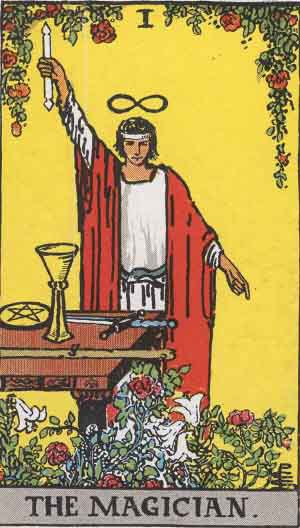
The Fool The Magician

Time, it seems, goes in only one direction. Or that is our current understanding of the laws of physics. Of all the dimensions of this place we call the universe, the only one that is unidirectional is time. Of course, we may not understand everything yet. And perhaps our sense of “time’s arrow” is based on our perceptions of cause and effect: if one thing follows another, they appear to be ordered in time. But time is malleable, stretching and collapsing according to the theory of general relativity, although still just going in the one direction we call forward, toward the future.

I am not here for a meditation on physics, however. The human brain is capable of working time both forward and backward. We encode short- and long-term memories that capture images, words, feelings, sounds, smells, and other artifacts of experience. Some people’s brains record everything they experience, every day, every minute, going back to first awareness. For most of us, the capture is more selective, usually affixed to experiences that left us with a strong emotional response. But some memories just get stored, almost randomly, and repeat themselves at the oddest of times or in scrambled contexts.1

We also use the mechanisms of the prefrontal cortex for planning and decision making, which are both projections of today’s activities into the future. We not only try to predict the future with our plans and decision, but we mentally inhabit a fictitious future with our hopes and daydreams—a false future that exists in our emotional lives as an alternative to the choices and possibilities that exist in the front part of our brain.

Human beings—and to some lesser extent other mammals—are the animals that can move forward and backward in time, using our brains. Our bodies, however, only travel the forward route, seeing planning and decision points pass by us like signposts along a highway.

A balanced human in an integrated life uses both functions. We look forward in expectation for the protection of ourselves and our families. We look backward in remembrance to give meaning to that expectation.

Some people live too much in the past. Those who have bleak or unknowable futures, or the very old with almost no future at all, tend to dwell on the past and their memories of a former life and loved ones as a means of sustaining their individuality. Some who have trauma or misdeeds in the past tend to dwell on them in a fretful attempt to change what has already occurred and, in their dreams, create a new current reality.

Some people live too much in the future. The very young look forward because everything that has gone before—especially if their life has been the mundane daily round of play and school, and interactions with parents and friends—is merely preparation for the life to come, creating a set of skills and responses that will carry the person into adulthood and beyond. Others more adult live for the future because their lives so far have been wasted—especially if drugs and alcohol, bad relationships, or bad choices and actions have been involved—and they can only look to the future to make amends, make a better life, or create new meaning for that life.

My own life, I realize now, toward the end of it, has always been frontally focused. I have always been considering, planning, and dreaming about the next day’s work, the next job, the next book to read or write, the next experience. I do recall the past and have pleasant memories of most of it, but I do not live there. I live in tomorrow, next month, next year. My head is always somewhere six months out.

When I was at the university and was already focused on studying English literature and a future as a writer—novels were always my first choice, although not the most lucrative part of my eventual writing career—I took a course on Predicting the Future. This was part of that academically silly season in the late 1960s, when campus radicals were demanding courses with more “relevance”—by which they meant to steer away from the traditions of Western Civilization. But my mentor, the science fiction author who wrote under the pen name William Tenn, took advantage of the opportunity to inject a bit of his favorite subject into the teaching. We read the current crop of futurist authors and a bit of predictive science fiction, and we studied the ways people have tried to know what’s coming next. For example, I wrote term paper on Tarot cards as a method of fortunetelling.2

But now, in my seventy-third year, I find that looking forward has disturbing possibilities. There aren’t that many new experiences, possibilities, or choices out there ahead of me. Sometimes the future seems like a narrow, gray space, like the last few pages under your thumb in a book that you are reading and enjoying, whose plot you are following, and whose climactic moment has not yet come, and you’re not sure there are pages enough, time enough, to make a suitable ending. Six months out used to be a long time for me. Now, on some days, it seems to be all the time that is left—even though I am still healthy, strong, eating right, exercising, healing well, and hopeful. But just … how much more can I expect from life?

It’s not a terrifying thought … yet. But when you can sense the Great Darkness somewhere beyond that gray space, it makes you pause and consider your past life choices.

1. And, as research into “false” or altered memories has suggested, every time we recall a memory, our brain does a little editing—maybe a bit of improvement, sometimes a bit of damage—that changes the memory for future recall. Nothing is fixed in our brains, like an engraving on a steel plate. Instead, everything is more malleable, like the silver nitrate in a film emulsion, which can be affected by later exposure to light, or the digital bits in a computer memory, which get translated out of storage and then translated back into storage, with changes and degradations going both ways. Our brains are more a fluid “chemical pot” than a hard-wired “electric box.”

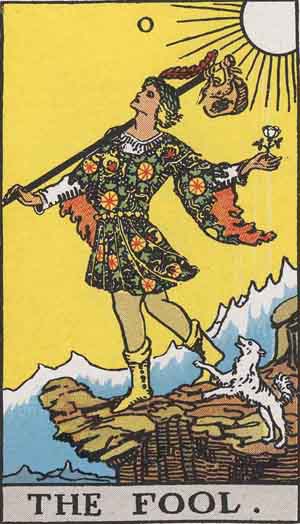
2. Actually, the Tarot—particularly in the 22 cards of the Major Arcana—is a story of human struggle and conflicting values that stands in opposition to the Judeo-Christian tradition. It relates the life transition of every aware soul from the insouciant and careless Fool of Card 0 to the powerful and careful Magician of Card 1. It’s a story of personal development.