Sunday, February 27, 2022

War Then and Now

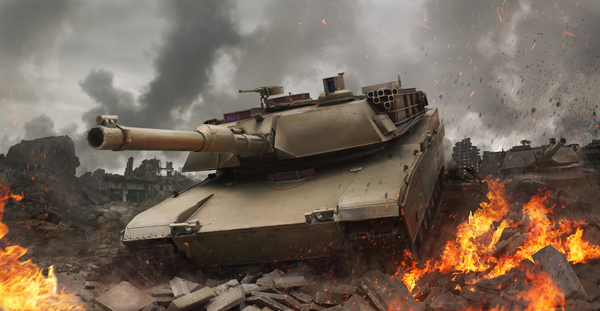
War devastation

An article in the Wall Street Journal (behind a paywall, unfortunately) last week at the start of the Russian invasion of Ukraine noted the number of U.S. and European companies with stakes in or economic ties to Russian companies and suppliers, and how the war was making them scramble. And, of course, most of Europe depends on Russian natural gas that flows in pipelines running through Ukraine—or might have flowed through the Nord Stream 2, except that Germany on the eve of the invasion declined to certify that new pipeline.

My point is that the world is a lot more connected place these days—economically, financially, informationally, and in every other relational dimension I can think of—than it was the last time we had anything like a world war. And whatever you can say about the ties between Europe and Russia goes maybe double or triple about economic ties between the U.S. and China, and exponentially deeper and wider for any political disagreement among the various U.S. states themselves.

War just isn’t practical—maybe not even feasible—between two major powers anymore. Sure, we can have “brushfire wars” in places like Afghanistan or Iraq or Syria, certain parts of Asia and Africa, or South America. Those are, frankly, places of former colonial dependency that may still supply oil or some cash crop to world trade but are not vital trade centers themselves. I’m not saying these places don’t matter but, let’s be honest, they can have a meltdown and engage in a civil war, with one or more superpowers backing and rooting for one side or the other, without inconveniencing anyone outside their borders.

But let a place like Russia start a war that interrupts the flow of energy, and people take notice. Let a place like China fall down on its trade agreements with the rest of Asia and the world for some political reason—or attack the semiconductor foundries of Taiwan—and a lot of people lose their jobs in those other parts of the world. Many Chinese also go out of work and maybe even starve.

And let’s talk about the gorilla in the room, political unrest leading to blows in the U.S. Not just summer riots, gunfire, and “revolution” in places like Minneapolis, Seattle, and Portland, but formal, legal, legislative votes to consider separation and partition. Then you’re talking actual civil war, like the unpleasant affair from 1861 to 1865, with self-proclaimed governments, opposing armies, invasions, battles, shifting personal allegiances, civilian deaths, and so on, horribly.1

Or, instead of a state-against-state conflict, the political tensions that now exist might erupt like the Spanish Civil War: neighborhood against neighborhood, urban versus rural communities, or clublike affiliations fighting each other, like the supporters of different soccer teams battling in the streets, except with guns and improvised explosive devices.

That sort of strife might almost be possible—if, unlike the recent urban riots and “revolutions,” a true opposition to the independent rioters were to emerge and engage them on equal footing. Not just a handful of opportunists ready to wage battle for the fun of it, but a real and devoted uprising with plan of attack and defense. But such a scenario would only be possible if the state or federal government stayed out of it, watched, wrung its hands, and pretended nothing real was happening—like the federal government and the states of Minnesota, Washington, and Oregon during the recent urban unpleasantness.

That sort of war without the supervision of competent adults can go on for years. See again Afghanistan, Iraq, Syria, or certain parts of the rest of the world. But a declared and actively pursued war between coalitions of U.S. states on the model of the first Civil War? No, not now, and not in the future.

And why do I believe this? Because, like the other major, developed countries in the world—those that join and run the Organisation for Economic Co-operation and Development (OECD), the International Monetary Fund, the World Trade Organization, the United Nations Security Council, and other organized bodies—the various states in this country are too interconnected to ever go to war with each other.

Since the 1860s, we have built networks of information, banking, interstate commerce and communications, webs of electrical transmission, oil and gas pipelines, highways, corporate ownership and franchises across the nation, and other links that cannot be easily severed. We bank with companies headquartered thousands of miles away in other states and trade stocks and bonds at exchanges in New York and around the world. Try to break up a national bank like Wells Fargo or Bank of America or arrange communications so that it can trade across quasi-national boundaries between warring states—that’s a whole lot of disruption, negotiation, and work. Try to maintain cell phone and internet services across such lines. Try to operate something as complicated as a gas pipeline, with rights of way and pumping stations to maintain pressures and temperatures, across a hostile, quasi-national border. Sure, all of this can take place internationally when there are trade agreements, treaties, and good will among partners. But once a war shuts the border and armies start marching? Once bombs are falling and people are routed from their homes? Oh, no!

About the only thing that crossed the borders between North and South in the years before the first Civil War were railroads. And most of them were small, entrepreneurial affairs that linked one part of a state with another, one town with the next. Organized interstate commerce, railroads and telegraph lines covering whole regions and extending out to the West Coast, didn’t really get under way until after that war was ended.

Consider communications. The Nazis in Germany and the Soviets in Russia could maintain their dominance exclusively through propaganda. Their governments controlled or owned the newspapers and radio stations. Germans in the 1930s could buy only radios with limited range, so they could not receive broadcasts from outside the country. Russia had two newspapers, Pravda and Izvestia. In either country, any independent form of mass communication—even printing and handing out leaflets—was treated as a crime. Today, the internet passes information like candy. Anyone with a computer or cell phone has access to multiple news sources and reference libraries. The national media can bewail “misinformation,” but they no longer have an exclusive voice. The Chinese can try to censor the internet at their borders, but who knows how effective that tactic really is? Technology has changed the nature of information, for good or ill.

Consider food distribution. Today, we eat fruits, vegetables, and meat grown on other continents. We eat fruits and nuts from California, beef from Texas, and chicken from all over, sent across the nation by rail and truck under refrigeration. We eat seafood caught in the Gulf or the Atlantic and Pacific oceans and sent inland while still fresh. Our processed foods, like canned goods, breakfast cereals, potato chips, and even packaged breads, come from plants that may be a thousand miles away across state lines. You close those borders in a war, and all of that food diversity disappears. Then you really have to depend on “locally grown” and “artisanal” fare from communal gardens—and may whatever spirit you pray to help you then!

War these days is a lot more complicated. We all have good reason to join hands across country borders and state lines, to live and work under global and national agreements. The alternative is not just unpleasantness but more likely issues of life and death.

1. This scenario presumes a strong president in the former national government who will fight to maintain the union and not simply let the seceding states go their own way. Lincoln fought in 1861. Stephen Douglas probably would have waved goodbye.

Sunday, February 6, 2022

Ultimate Reality

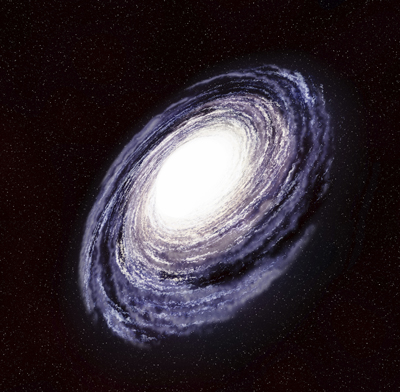
Spiral galaxy

I was reading an article in the February 2022 issue of Scientific American titled “The Origins of Space and Time” by Adam Becker.1 The article suggests that space and time, which we take to be fundamental properties of the universe, might in fact be emergent properties created by something deeper that we don’t quite understand.2

Becker examines recent attempts by physicists to reconcile the big world of general relativity, where space and time (or spacetime) are shaped by gravity—and where we humans happen to live—and the tiny world of quantum mechanics, where gravity seems to be nonexistent or have no apparent function. Physicists have long spoken of a theory of “quantum gravity” that would reconcile the two realms. In the article, Becker examines several such attempts.

One attempt that’s been around for a while is string theory, which is a purely mathematical conjecture, positing every subatomic particle as being a tiny loop of string that exists in several dimensions and vibrates continuously. Another attempt combines a special interpretation of the spacetime from general relativity called “anti–de Sitter space” (AdS) with a variation of quantum theory called “conformal field theory” (CFT) to explore how subatomic particles become entangled in a relationship that can exist over vast distances. The suggestion is that these entanglements might knit together the reality that we perceive as space and time. A third attempt cites a theory, again from quantum mechanics, called “loop quantum gravity” that views space and time as tiny, discrete bits that are bound by one- and two-dimensional connections that create a “spin foam,” and this spin foam creates for us the illusion of space and time being continuous.

Again, I don’t have the physics training or the mathematics understanding to make much of these theories, and Becker’s article does not supply the supporting equations. Still, to me, these theories all seem to be conjectures for which the creators can write equations that balance out and don’t violate any known principles, but otherwise they are just fanciful imaginings.3

But one part of the article that did strike me intuitively was the question of how spacetime could be emergent in the first place, quoted from Eleanor Knox, a philosopher of science at King’s College London. She noted that we humans are land animals, and our direct ancestors developed on the African savannah. There we became attuned to the vast distances that we could see and the threats of predators and opportunities for prey, represented by physical beings crossing that landscape. Everywhere we looked on Earth and out into the distances beyond the sky we saw physical objects moving through space and time. No wonder then that we thought these things, the space they filled, and the time that passed while they had that location and held that form, were the basis of ultimate reality.

As I tried to absorb the article’s theories, especially after the mental dislocation of Knox’s suggestion, it occurred to me that if space and time and their relationship to gravity emerge from any underlying, ultimate principle, that reality is energy. Energy in different forms is the root cause of and the motivation for everything we see and experience.

Our chemistry and physics break down everything we can see and touch into molecules, which are made up of atoms. Atoms are divisible into complex particles called “hadrons”—the protons and neutrons in the nucleus—that are made up of various combinations of supposedly indivisible, or “elementary,” particles called “quarks.” These quarks come in six types or “flavors” in what quantum mechanics calls the “Standard Model.” Other elementary particles are “leptons,” which include the electron that orbits the atomic nucleus and various kinds of neutrino that, among other things, can distinguish a proton from a neutron. There are also elementary particles called “bosons” that carry force, such as the photon that rides a wave which, at different frequencies, is responsible for everything from radio and television signals to heat and light to x-rays and gamma rays.

From one point of view, all of these particles are real things with known qualities like their spin and quantities like their mass. For example, sometimes a photon—which has no measurable mass—acts like a solid particle in some experiments. From another point of view, every one of these particles can, when brought together with sufficient force in a particle accelerator, disappear into a cloud of pure energy that only subsequently resolves itself into new and different particles. And sometimes, in some experiments, a photon acts just like a wave with no physical, thing-like presence at all.

So what is matter, really? Under the closest scrutiny, the most thinly sliced reality, matter is made up of frozen bits of energy that temporarily have a physical identity and a locatable spatiotemporal address. But jostle it hard enough, and it evaporates into a flare of energy. Einstein understood this with his equation e=mc2, or “energy equals mass times the speed of light squared.”

You can test this for yourself. Are you a thing or a form of energy? As a thing, I am a few pounds of common chemicals knit together into complex molecules that interact through certain electromagnetic attractions, all while suspended in a hundred or two hundred pounds of water. My thingness is interesting to a biologist, perhaps, but its thingy nature doesn’t change much from the time two hours before I die, when I am alive, to two hours after the event, when I am cold and dead. On the other hand, as a process, I am very active at the one point and inert or nonexistent at the other. As a thing, my chemical makeup changes daily. My components and physical form change visibly from one year or decade to the next. But the characteristic that makes me a vital, continuous identity—the energy represented by all my assembled and interacting chemical-and-metabolic, neuronal-and-mental processes, and the mind and memories that result from them—is very real. I have a temporary physical identity and a locatable spatiotemporal address, but at heart I am a stream of energy.

Consider the Big Bang.4 From the point of view in which space and time are the ultimate reality, the event started with a compressed state of matter, with all of the atoms now composing our visible universe crowded into a single, compact mass. And that mass suddenly destabilized and dispersed into previously existing and waiting space. But from the point of view with energy as the fundamental reality, this was an outpouring of energy that eventually condensed, organized itself into localized particles, and defined space and time as a result.

Consider black holes. From one point of view, they are concentrations of mass into a space so small that their gravity overwhelms local conditions of time and space. From the other, they are concentrations of energy—for gravity is clearly a form of energy, or else why do the quantum physicists keep trying to encumber it with a so-far-undetected force particle, the graviton? The amount of energy contained in the thing we call a “black hole” annihilates both space and time and, along with them, matter itself.

Consider that kinetic energy and inertia can increase the apparent mass of any object. This is why a bump with a four-pound fist, or a four-thousand-pound automobile, is different when the object is traveling at two miles an hour from when it is traveling sixty miles an hour. The thing itself has not changed, but its energy certainly has.

In our real and observable world, distance is only meaningful in terms of the energy needed to travel from one point to the next, and time is only meaningful in terms of the energy needed to power the events, actions, or processes by which it is counted. These things appear to be separately meaningful to our brains in our perceived reality as land-based hominids having to walk across the savannah or throw a stone or spear to bring down prey for our next meal. But the underlying reality is the energy involved.

All of this raises a philosophical or existential question. What is a painting? What is any work of art, for that matter? Is the painting “really”—that is, its ultimate reality—defined by the canvas that supports the paint? Is it the pigments in their base of oil or acrylic, which reflect certain wavelengths of visible light and not others to the observer’s retina? Is it energy that applied those materials in their lines and sweeps across the canvas? Or is the painting “really” the artist’s intention that selected those particular pigments and directed the brush in applying them? Without that energy of selection and application, the painting has no underlying reality, and the canvas has no meaningful dimension. Without the sculptor’s application of hammer and chisel, the marble has no final shape. Without the potter’s intention expressed through her fingers and the pressure they exert, the clay is just a formless lump.

Energy in both its active and temporarily frozen forms defines space and time. Energy is the ultimate reality and underlying fundamental of the world we see around us. It’s not the savannah, and not the rock or spear, but the way energy shapes their relationship that makes them important in our human perception.

1. Unfortunately, the actual text of Becker’s article is behind a paywall. He is also the author of the book What Is Real?: The Unfinished Quest for the Meaning of Quantum Physics, in which he analyzes the question, first raised by some of the originators of quantum mechanics themselves, of whether their theories represent anything that exists in the real world itself or are just an imaginative system supported by their mathematics.

2. For some background on my interest in this question, see my two blogs Three Things We Don’t Know About Physics (I) from December 30, 2012, and (II) from January 6, 2013. My point there is that we simply do not understand or have a real definition of the effects we see as gravity, space, and time. I freely admit that I am not trained in physics, have an inadequate background in mathematics to understand most of the physicists’ equations, and just stand here questioning. But I also think—like Becker in the article—that we’re missing something big.

3. To understand the depths of my mathematical ignorance, see the blogs from 2010, Fun With Numbers (I) on September 19 and (II) from September 26, as well as Fun With Negative Numbers from November 3, 2013.

4. I am always cautious when citing the Big Bang. It strikes me as something we haven’t fully examined. We discovered at one point in time—when we started observing the universe with sophisticated telescopes operating at various wavelengths—that it was expanding. We could think of no reason for this expansion, or what might stop it, or how it might change over a time span longer than humanity’s brief life on Earth. And so we “ran the film backwards” to a computed point in time and space when everything we could see in the cosmos was all bound into an infinitely small, infinitely dense particle. There are aspects to the process of expansion from there—like the necessary period of “inflation,” which brings the universe to its currently observed size by having the expansion briefly exceed the speed of light—that make no sense to a rational person. But it all gives the universe a starting point, a creation story, and human beings appear to need creation stories.

Sunday, January 30, 2022

Anger is a Weakness

Angry businessman

On the business channel, CNBC, I recently saw an advertisement for an on-call flight service using private jets. It featured a frustrated businessman whose own jet had broken down. He was stamping his feet and shouting that he would be late for his “important business meeting.” Later, on having arrived at his destination, he was screaming for someone to tell him where all the taxis were. The point was that, if he had only signed up with the advertised service, he would always have a perfectly functioning plane at his disposal and a chauffeured vehicle waiting when he arrived.1

The reason I mention this is that, despite having his own private airplane and an important meeting to go to, this sample businessman came off as a ranting fool. His portrayal was presented as an object of fun, rather than an example of a serious business problem. After all, what is funnier than a red-faced man giving in to his anger? Or a woman with her face screwed up giving vent to her unhappiness? These are stock characters from the human comedy: the fool and the shrew, Punch and Judy.

The person who gets excessively, visibly angry or upset is a person out of control. Their emotions have gotten the best of them, temporarily overriding their reasoning mind and, to use a phrase from another culture, denying their “Buddha nature”—that is, their real, underlying sense of self. Worse, anger and upset are reactions, letting events and insults control you instead of controlling your own causal, social, and emotional environment.

On the flip side, what is more inspiring or calming than a person who can nod and smile and even laugh at adversity? These are the gestures and the disposition of someone in control of their surroundings and sure of themselves. The smile and laugh suggest that the person was wise enough to see adversity coming and to probably have a plan for dealing with it.2

Anger also makes you foolish. When taken to extremes, it can make you hasty and careless. You can overlook the lessons you’ve learned in the past, rush into action you’re not ready to take, and leap at conclusions about which you have not thought or deeply considered. Then you will have more to be angry about—anger at the situation, and angry with yourself for being a fool. Anger compounds weakness and destabilizes your life and your relationships.

The confident man or woman remains in control of emotions. They reserve anger for the true evil that should be righteously opposed, then use it as deep motivation in planning and executing right action. They love, but only when it is appropriate and may confidently be expected to be returned. They laugh, but only when the incongruity of the situation evokes shock and merriment, and then never hysterically. They don’t laugh when the shock and loss happen to another, because then the hurt is real and not at all funny.

We all admire a measured confidence. Not the confidence of the fool who has never been tested and knows no better, because that is truly sad. But the confidence of the person who understands life, expects it to both buoy them up and weigh them down, and who has a plan for either eventuality. When I was growing up, we called such a person “cool.”

Cool is not cold and uncaring. But it is the lack of heat, of visible anger or upset. The cool person moves through life dealing with crises, prepared with skills and reflexes that are appropriate to their situation, with knowledge and perspective that makes shock and surprise more difficult, that shields their inner nature from feeling wrong-footed and foolish.

In my day, this was the coolness of the secret agent, the undercover operative, the James Bond or Derek Flint. This was the person who functioned according to the words of General James Mattis: “Be polite, be professional, but have a plan to kill everybody you meet.” Maybe our admiration for such a person—someone who was living an intentional lie, sometimes with criminal accoutrements and intent—was misplaced. But we did aspire to the operative’s capability and general air of unflappability.

Giving in to anger is a weakness. It is a sign of the unprepared mind. It is small-minded and, to those of us watching from outside the situation, inherently funny. Moreover, it is physically and psychologically dangerous.

1. The ad never mentioned how much all this would cost, but I’m betting that I and my modest travel needs are not the target market. A fleeting glimpse of a screen shot suggested five figures, which is way too expensive for me.

2. Even if you don’t have the foresight to anticipate and plan for this particular adversity, the superior mind always expects some measure of trouble from some dimension. People of such a mind always have a backup plan, a work-around, an if-this-then-that on hand. They are seldom caught out by events. And they don’t get angry when events catch up with them.

Sunday, January 23, 2022

My Country, Right and Wrong

Freedom among the clouds

There is a lot of talk these days about this country’s past sins: slavery and pervasive racism, genocide of native populations, neo-colonialism in Asia and South America, and on and on. It would seem that a lot of people on the left side of the aisle dislike, even hate, this country and would like to see it “fundamentally transformed” into some kinder, gentler, meeker, more self-abasing place. Perhaps like Lichtenstein, but without Lichtenstein’s proud traditions and tax-haven status.

I come from the center of the aisle, with one foot on the right side of the carpet. I can acknowledge that this country has made some brutal, egregious decisions in the past and is not perfect today. But we still have done some good things. We rolled up our sleeves and fought in two world wars against expanding spheres of fascist influence in Europe and Asia that never would have impinged on us directly. We became a haven and refuge for immigrants from even before the founding of the nation as a whole, and we still welcome asylum seekers and those who want to make a better life. We are one of the few countries in this world that offer a complete life to those who will obey our laws but don’t want to assimilate to the American culture and give up their ethnic heritage—we celebrate their holidays as happily as our own. And after the last world war, as the sole remaining superpower, we tried to police the world’s little warlords and rebuild our allies and enemies, instead of occupying their territory and carting off their national and cultural wealth.

We are, as I’ve written before, a nation of immigrants and stronger for that. Even the prehistoric people who walked here across the Bering land bridge and past the glaciers, even those who were brought here against their will and in chains—and were strong enough to survive and hope—have found a way to build a better life for themselves here than in the places they came from. And those who sailed either of two great oceans and landed here of their own free will represent the bravest, smartest, strongest, and most determined of their native lands’ populations. They are the self-selected individuals who did not want to put up with one more war, one more tax, one more pogrom, one more landed aristocrat or insulated bureaucrat carelessly making decisions about other people’s lives. In every case, we got—and still get—the strong ones.

Our national character—the core of our aspiration, not the fringe pattern of our separate ethnic embellishments—reflects this. Americans one and all are optimists. We are determined. Yes, we are sometimes careless ourselves. And sometimes we are bumptious and gauche in the eyes of European and Asian sophisticates who live in older, more settled cultures. But we are busy inventing and building a new world that sometimes only we can see.1

Yes, we made mistakes, and we’ll make plenty more in the future. To quote a line from my corporate days, “If you want to increase your success rate, increase your failure rate.” That is, if you’re not making some mistakes, you’re not trying hard enough to achieve your potential.

Am I bothered by the negative comments about my country? Oh, some. If people hate America enough to scrap everything and start over, then I am saddened—especially if they pick the dormant economies and collectivist cultures of Europe or Asia as their role models. Marx was a fool, and utopian socialism doesn’t paint an exciting future even as a selfish child’s dream.2

But the ability to acknowledge past wrongs and work to make them better is a strength. In the past sixty years, the majority of my working life, we have initiated a sea change in this country to adjust attitudes towards and provide opportunities for neglected Native Americans, African Americans, and other racial and ethnic minorities. This is a sign of strength. It reflects the generous spirit that infuses the American conscience. While we’re busy building that new world, we extend a hand to those we think might not have caught up with where we’re going. And that is all good.

So, not perfect. This country is not all wrong, not all right, but somewhere in between. Although I am leery of comparisons between individual and national characters, I think this one fits. We are, as a people, on the whole, a fairly good country. We’ve made mistakes, and we’re aware of them. We’re trying to do better. And we’re looking to the future with hope.3

That’s healthy in both a person and a country. Or so I believe.

1. You want examples? We give more in charitable giving than other countries. There, people might take care of their families, but they expect the government to take care of the others. Here, people support domestic charities like Habitat for Humanity and foreign organizations like Doctors Without Borders, as well as local groups like the neighborhood YMCA and Boys and Girls Clubs. We give money to strangers, as attested by the people who sit at the bottom of freeway offramps with signs saying “Help—Hungry” and find it pays well enough to keep coming back.
    We volunteer more than other countries, too. From the traditional barn-raising to the people who volunteer each September to clean up rivers and beaches in Coastal Cleanup, we pitch in. My late wife used to volunteer at Marin County’s Marine Mammal Center as part of their Monday Day Crew, shoveling seal dung out of the pens, mixing fish mash, and intubating sick and dying animals. This was hard, dirty—but rewarding—work. A Dutch veterinarian who came there to study the seals and sea lions commented to my wife that you didn’t see such volunteers in Europe: some women might come in to pet the animals, she said, but not to clean up after them.

2. Marx’s vision of the future was a tribal barter economy—or the feudal castle without the feudal lord—writ large. It is totally inadequate in a nation-state of hundreds of millions of people spanning an entire continent, as the Russians found, and the Chinese are discovering. My old quip is that “Marx is to economics as phlogiston is to chemistry.” That is, pre-intellectual nonsense.

3. One final personal reference. I was talking with a man who was raised in Eastern Europe, Czechoslovakia, where in his youth everyone looked east to the Soviet Union. He said that no one feared the United States, not because we are weak but because we didn’t want to take over anyone. But everyone feared the Russians.

Sunday, January 16, 2022

General Will

Show of hands

The French philosopher Jean-Jacques Rousseau popularized the term “general will” (volonté générale) to represent the desires and intentions of a community or nation as a whole. This is supposedly the embodiment of a collective consciousness that exists, makes decisions, and expresses demands apart from the individuals living and working in that community or nation. If you can just find and express that “general will,” then politics becomes so much easier. Stick with the popular opinion, and you can’t go wrong.

I don’t believe it. I don’t believe there is such a thing as “general will” or popular opinion or collective consciousness above, beyond, and overriding what individuals decide and do. Minds are individual things. People’s brains are isolated inside a bony box, communicating with the outside world through spoken words, printed and electronic messages, and seen and remembered images. But their thoughts are private and ultimately powerful in deciding what a person will do. Or so I believe.

This is not to say there aren’t some beliefs that most people in a community or nation share, notions they were born into, reflecting the culture established by their parents and grandparents. Everyone is shaped by their family and tribe, the church or party their tribe belongs to, and the values learned at their “mother’s knee.”

The lucky ones are also taught enough caution and skepticism that they eventually question everything, including the “home truths” with which they were born. That is the great thing about the human mind: it can hold two or more opinions at once, weight them, evaluate pros and cons, chances and likelihoods, and reflect on personal experience to decide which opinion is more congruent with perceived reality. And that’s all anyone has, because “ultimate truth”—aside from obvious, empirical conclusions like “water is wet” and “fire will burn”—is not promised to anyone.

And this is not to say that ideas are not floated in a community or nation by popular influencers, political parties, and the news and social media. It happens all the time. And in the last decade or two, it happens more and more, now that the internet makes available many more pieces of information—good and bad, hopeful and hateful—which people in general can then either accept and prize or reject and despise. But that acceptance or rejection is still subject to individual thoughts, desires, acculturated understandings, and personal whims—all of which occur within that bony box.

But the thing about consensus notions and any actual “general will” is that they are … general. That is, they are not specific and do not actively support any particular program or prescribe its parameters. Those specifics are open to interpretation, weighing, evaluating, and other acts of individual thinking.

Yes, Western Civilization has been on an upward moral path in the past couple of centuries, ever since the rationality of the Enlightenment tempered the religious fervor of the Reformation. People—or at least those who read, write, and think—are more inclined these to a broader view, with more tolerance and generosity, more caring for the social good than the simple me-and-mine of family and tribe. This is not something you see in many other parts of the world. But that generous, tolerant spirit is still not a prescription for any one program of welfare payments or public health care. People are still able to weigh the costs and benefits, evaluate the subtle impacts on personal responsibility and motivation, and argue about specifics.

Rousseau’s volonté générale is an interesting idea in the abstract. It is suitable for being theorized about and debated by philosophers and academics. It belongs on the syllabus, along with economic and cultural Marxism and Freudian psychiatry, as an artifact of philosophical thought. But it is a poor thing upon which to base a real-world approach to politics and social order. That way lies madness.

Sunday, January 9, 2022

Politics on the Front Porch

Mount Vernon

I’ve been thinking for a while that things in these United States have gone—well, not wrong, but somewhat askew. This is not the fault of any particular party or politician. And it’s not an inherent flaw in our Constitution or the setup of our government. But the problem bothers me, and I think about it.

The issue may be that no one governmental structure was ever meant to fine-tune the control of a nation of 330 million people from dozens of ethnic traditions in an area that spans four time zones across an entire continent. This is just too big a job for any emperor, monarch, or president and his—and maybe her, eventually—administration. Europe has tried for three decades to be a unified place, but it remains a patchwork of individually governed countries under the fairly weak umbrella of a centralized union and common monetary scheme. China, for all its monolithic aspect, basically manages affairs at the province level with only policy suggestions handed down from the central government in Beijing. Yes, the Chinese Communist Party is invested in the central and all local governments, providing a unified vision, such as it is, but day-to-day internal processes are local.1

Perhaps the only long-term, centralized governments that ever worked were those of the Romans around the Mediterranean and the Mongols in Central Asia. But both of those allowed a large measure of local control and administration. And both of them ended up fragmenting into smaller empires with a decidedly ethnic flavor.

In the United States, the vision of the original founders was a union, not an all-encompassing national government. The states would take care of most internal decisions to suit the needs and desires of local populations—which in the original founding often came from different parts of Europe with different customs and expectations. The federal government would manage just a few functions like national defense, foreign policy, and interstate commerce. And that worked for most of the 19th century, with exceptions like the turmoil of the Civil War. For most of that time, the federal government survived on funding from tariffs and excise taxes—think of the Whiskey Rebellion in the 1790s. There was no federal income tax until 1913.

But then, under the push of progressive and liberal presidents like Wilson, Roosevelt, and Johnson, reacting to both internal and external stresses that they could see no other way of managing, the federal government grew. It extended its reach downward into affairs that used to be left to local decision-making. The executive power of the president expanded the complexity of administration and added cabinet posts for oversight of functions such as energy, education, and health that were never mentioned in the Constitution. And the Federal Reserve, which is a separate organization but operates under the federal government’s wing—with its chairman appointed by the president and approved by the congress—now takes responsibility for the control and orderly functioning of banking and the national economy.

Article 10 of the Bill of Rights, appended to the U.S. Constitution as originally adopted, grants the federal government only those powers described in the original text and, presumably, its subsequent amendments. The rest of the governing function is reserved to the states and to the people. But, as noted above in the instances of things like energy, education, and health, the federal government today makes decisions, writes laws, and issues regulations—which have the force of law and are adjudicated in the courts—far beyond the original enumerated powers.

For much of this—the legal underpinning, if not the political urging—we can blame the Interstate Commerce Act of 1887. It was based on the Commerce Clause in Article 1, granting the federal government power “to regulate commerce with foreign nations, and among the several states, and with the Indian tribes.” The act was intended to regulate the railroads, which conducted business in several states and across state lines, and which were effectively ungovernable by any single state or by the conflicting laws of the various states where they operated. But that commerce clause has been expanded again and again, and it now governs almost any organization or enterprise that operates across state lines—which in a large and busy nation includes almost any function larger than a mom-and-pop grocery store.

Was this a weakness in the original Constitution and its intended creation of a union with limited governing power among strong and vibrant states? Or has it been exploited by politicians with a hunger for power on a wider—a nationwide—stage? And, as a corollary, could the small and limited national government of the pre–Civil War days have functioned effectively as a superpower on the international stage in the power vacuums left by the First and Second World Wars? I can’t answer those questions. But the thing is already done.

And still … in a way … the government that we have now is something like a jerry-rigged structure. It is as if someone had taken the front porch of a house—even one that extends around both sides of the house—and tried to turn it into the main structure and dominant living space. You can imagine the amount of new foundation supports, insulated wall construction, door and window installation and glazing, plumbing and electrical work, not to mention the planning and creation of new rooms and their assigned functions, that would be required to make this a success. Otherwise you would get a patchwork, a hodgepodge, and a lot of arguments and disappointments about how things are apportioned and whether the whole thing works at all.

But that’s what we’ve got. And the situation is made worse because congress has ceded its obligation, under the Constitution, to write effective and specific laws. These days, knowing that the administration’s various departments will work out the details, congress writes large, loopy acts running to thousands of words—sometimes thousands of pages—filled with wish fulfillment and desired end states. The real business of governing on the ground is then left up to the executive branch: the president and the cabinet departments that report to him—or maybe her, eventually.

This concentration of power starts to look a lot like an autocratic body, the domain of an emperor or king and the court of ministers and clerks that support the imperial or monarchical will. That’s not a good way to go, because as noted above, empires like those of the Romans and the Mongols eventually collapse.

But we might have a few hundred years of autocratic and hereditary rule to experience before that happens.

1. How do I know this? Because I’ve worked at companies that have had, or tried to have, dealings with China. The national ministries are more like think-tanks or policy-making institutions—functioning like our Centers for Disease Control and Prevention—than actual governing bodies issuing regulations and executing business decisions like our Environmental Protection Agency or Department of Education. And when you ship products into China, you often have to change package labels and pay new tariffs when transshipping from one province to another. Vision in China is central; control is local.

Sunday, January 2, 2022

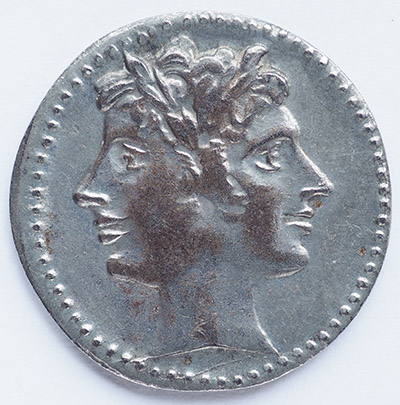
Janus, God of Doorways

Janus coin

Well … it’s the New Year, 2022. Anymore, after the last two years, in reaching this calendar change I feel like an exhausted swimmer putting my hand on the pool coping tiles after completing far too many laps. The hope is we get a respite, an easy year, no excitement, with a pandemic that becomes something familiar and relatively tame like the flu, with a supply chain that unsnarls itself, with inflation that subsides as the economy continues strong and those supplies keep comping, and with the saber-rattling easing over the Ukraine and Taiwan. Well, I can hope.

The date and the month have me thinking about that peculiar name, “January.” It comes from Janus, who was the Roman god of doorways, gateways, passages, transitions, and similar movements from one thing to another. He is always depicted as having two faces, looking forward and also backward. Forward to the new year, backward on the old. We show something similar in our more modern cartoons around this time, of the past year depicted as a tired old man, the new year as a smiling, bouncy baby. Or at least I hope the baby is smiling.

Janus is also where we get our world “janitor.” In ancient times, among the better families who tended to shape language, every well-equipped house had someone who answered the door and announced guests—and likely had a bit of physical strength and prowess to block the door and bolt it against assailants and vagabonds. In more recent times, this person would be the butler or—if you’re an aficionado of Downton Abbey—perhaps a footman. In either case, the janitor was an important member of the household, because he would guard the door, admit friends and guests, and turn away political enemies, beggars, and robbers. It was a job with a lot of discretion.

In the last century, the job of janitor has morphed into someone employed by an institution—a school, hospital, or commercial establishment—to perform routine cleaning, pick up obvious trash, and attend to the messes that the inmates and visitors create. And that seems pertinent to the end of the past year: we’ve got a lot of messes that everyone is pointing to and complaining about, but no one seems to be cleaning them up.

Janus is the god of transitions, of moving from one state to the next, and incidentally picking up the litter that the previous events have left behind. Every former state or condition leaves its mark in broken promises, dashed expectations, scattered confetti, dirty plates, and torn paper. Before you can move on, the god of transitions has to look back and clean up the former mess.

Something in the human brain wants a fresh start every so often. That tends to include a good nap, a hot bath or shower, a solid meal, and a cup of coffee. At the same time, we reflect on what has just happened, what we have been through, what personal decisions we make about the experience, and how we would like to remember it. That’s the way we put things behind us, brighten up, manage to smile, and get ready to charge ahead into the next crisis or challenge. And here, too, Janus is our guiding spirit, looking backward and looking forward at the same time—the god of passages and transitions.

And so we head into 2022 after a relaxing New Year’s Day, with a nap, a meal, and a cup of coffee. I only wish I didn’t hear in my head a paraphrase of that Bette Davis line in All About Eve: “Fasten your seatbelts. It’s going to be a bumpy ride.”