Sunday, August 28, 2022

Substitute for Money

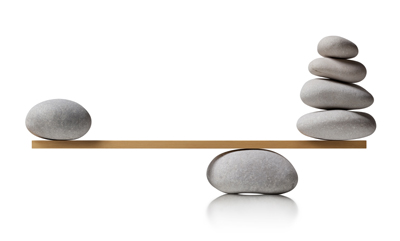
Balanced rocks

There is a new condominium development near us, half a dozen units, each with multiple bedrooms, located near the food center, close to shopping, and on a bus line. Always being interested in other options, I checked out the complex’s website and found that each of these units was selling for north of a million dollars—which is about right for this area. But one day I saw that one of them was being sold for a little more than $300,000, with a limited time for buyers to apply and an announced date of sale several days in the future.

This was clearly a “below market rate,” or BMR, housing unit—which is generally a deal between the property developer and the permitting agency, such as the city, or the supplier of partial funding, such as the federal government, to make a portion of the development available to people of moderate to low income. This sort of blending—of people at one economic level with those of another—is apparently considered a societal good.1

And I wondered, why? On one hand, I suppose, this is some offshoot of affirmative action and fair housing, based on the premise that minorities always make less than the average buyer in any area and so need special help to preserve a mix of neighbors. But if that’s the working premise, then it harkens back to the racism of lowered expectations: “Those poor dears … They just can’t compete in our unfair society.”2

Absent an ethnic or racial angle, however, these income-level set-asides smell of an anti-capitalist, anti-rich mindset that wants to insist that money can’t buy everything. This is a way for the government to give some of the people good things, the preferments generally granted by having money, without requiring them to earn, save, or manage their money to get the things they want. The idea is that poor folks—the “deserving poor,” those barely making it, but certainly not the undeserving and self-destructive “homeless”—should be given a hand up, so that they can live in a really nice place alongside the good people who can actually afford the market price. Bring a little bit of the lower classes into the area … for leavening, I suppose.3

But money is just a store of value: easily held, easily transported, easily converted. I work to produce something of value for you, and you pay me in coins or credits that can buy me the things I want and need. Or I can save those value-carrying objects for a time of greater need, or to tide me through a disaster. You could pay me in meals and a bunk in a dormitory, or in a share in the product I make for you, or in bags of rice, cups of coffee, or snorts of cocaine. But money is easier to exchange, and I can use it however I want.

I can also obtain money by owning something that is useful to—or can produce something useful to—the society where I live and the economy in which I participate. I can own a machine that makes shoes, or music, or electrical energy. I can own land that produces water and a crop, or grass to feed useful animals, a mine that produces valuable metal, or a well that yields up oil or natural gas. I can own a house that other people will want to live in and so pay rent money. All of these things that I can own require some attention and care on my part. Money does not grow on trees, after all—unless they are apple, olive, or almond trees, and those still need tending and harvesting.

Because money is a store of value, I can inherit it from my parents and give it to my children. In this way, the family is simply an extension of myself. If my parents have been particularly industrious or thrifty, I will have more money—a start in life with more money to my credit—than the average person.

None of this—working in a high-value profession or industry, owning the means of useful production, or having industrious parents—is any kind of theft. A person reaps what they—or their parents and family—have sown.

Because money is easily transported and exchanged, the coins, credits, and property can be stolen from me. If property, then the thief can sell it for money of his own. Or a person of unscrupulous temperament can produce and sell illicit or forbidden goods and substances. In either case, such people are subject to pursuit, conviction, and jail time.

With money, I can have nice things. With enough money, I can pay people to do nice things for me, or to say nice things about me. Or I can start a company—set up the means of production, establish connections in trade, build places where useful work can be done—and hire people to work for me. Then I can sell the goods they produce and give them money to spend as they please. This is not theft either. I am using my money to help others make their money. An economy is like an ecology: the more activity there is, the more activity there can be. Wealth follows everywhere.

So … money is not a bad thing. Still … many people would like to have the advantages of money—nice things, a nice place to live, control of property or resources, a say in the activities of others—without having to put in the actual work, such as producing something useful in the first place, to buy these advantages. Or they would like to confer the advantages of money on favored groups—usually people whom they have already convinced that money and its ownership are a form of theft.

One of the issues in a democracy—or really under any form of government—is that a person can acquire money, power, and personal advantage without actually producing something of value or owning a productive asset. A politician can create the impression of disadvantage and the desire for compensation among people who have less money or advantage than others in their society. Hence the creation of “below market rate” advantages for people whose labor or savings do not qualify them for as nice an apartment as other, wealthier people can afford in the neighborhood.

Or you can generate money and advantage by playing on the conscience of those who have the resources of productive labor and family assets so that they sympathize with those who do not. And so are born charities, causes, and “development departments” for institutions that are supposed to do good work for the poor, the sick, the disadvantaged but also provide a good living and towering structures for those who might otherwise be productively employed.

And a new substitute for money is the concern for nebulous causes that don’t actually have to be spelled out in detail or provided for in concrete terms. Such is the latest trend of investing for “environmental, social, and governance,” or ESG, factors. That is, asking people to put up money for productive purposes but favoring its use for other causes and “stakeholders,” like the planet’s long-term environment, social programs that advantage the disadvantaged, and corporate governance that attends to the needs of something other than a profitable business. This kind of investment is also linked to “sustainability,” meaning something different from a business that can remain profitable but, again, implies the health and longevity of the planet itself.

If you can sell this kind of hot air and heat mirage—social guilt, societal benefit, and environmental concern, all without putting a single piece of bread in a hungry child’s mouth or picking up a single piece of trash from the sidewalk—then you can earn a modest, and sometimes an embarrassingly immodest, living. But you’ve got to keep up the pretense and never encourage the objects or the sources of your enterprise to ask exactly what you are accomplishing. Or, as Robert A. Heinlein put it in Stranger in a Strange Land: “Anybody can clap and cheer—but applause worthwhile will be found in a pile of soft, green folding money.”

Still, I favor making money in the old-fashioned way: earning it by providing a product or service useful to someone who has an actual existence, or by saving up and acquiring an asset that provides such a product or service. That is the real formula that commands power, respect, and advantage.

1. I can understand how “below market rate” works in a rental property: the landlord contracts to keep a specific number of units available for a rental rate below what he or she could otherwise charge. But now does this work in a condominium? There, the unit—that is, the right to the living space and a share in the common area—is sold to an owner, who has the same rights as someone buying a piece of land and building a house on it. Does the BMR owner contract to eventually resell the property at a defined fraction of the market rate? What happens if property values surge or drop due to external forces? And if he or she decides to rent the owned property, do they contract to make it available at a fraction of area rents? This BMR distinction seems to fly in the face of full ownership.

2. Note that I am not against mixing up the neighborhood. I have lived 46 years in the same condominium complex. When we started here, the population was mostly Caucasian with a mix of young and old and a few minorities. Over the decades, we have picked up a variety of other races and ethnicities: largely Middle Eastern and East Asian in subsequent waves of immigration into the Bay Area, but always with some of the native Hispanic and African American population. Our town has a good school system, and that attracts first-time buyers and new renters. Anyway, I am more comfortable living with a cheerful mix than with a fiercely held and fearful majority—which suddenly breaks in flight and the neighborhood goes to another complexion. That way lies a precipitous fall in property values.

3. In our condominium complex, this kind of leavening is achieved by having housing units of different intrinsic value. That is, units on the San Francisco Bay side, with better views, have a higher asking price than those on the hill side, looking at trees. Those higher up, also with more expansive views, are worth more. And the complex has a mix of one-, two-, and three-bedroom—or penthouse—units, again reflecting different prices and affordabilities. By contrast, in the small development under discussion, which had just the one below-market-rate unit, they were all three-bedroom units with similar views and amenities.


Sunday, August 21, 2022

Sex and the Story

Teasing with apple

There is a lot of talk these days—and a lot of public confusion—about the role of sex or gender, and the choice of a person’s “preferred” sex or gender, in daily life as a matter of personal identity. Well, people can imagine for themselves almost any kind of life, some possible, some improbable, and some downright daft. But thinking does not make it so. Even hormone therapy and the surgeon’s knife cannot counter the effects of X and Y chromosomes and the basic structure of biology.

And yet, notions about gender are fluid, not fixed. And still, they are not all that important in daily life.

As a writer trying to appeal to all sorts of readers, I include in my books both male and female characters. And to write as I do—where each scene in an ensemble novel is told from the viewpoint and limited perspective of a dominant character, rather than by an “omniscient narrator” who skips from viewpoint to viewpoint in a single passage—I often have to adopt the mind and perspective of female characters. This can be tricky and invite the scorn of women readers who know that I am a man. But to date I have not yet had such a complaint.

What is my secret? I look for the core of the character. What drives him or her? What does he or she want to achieve or avoid in the story? What is most important in this moment of actual perception in the storyline?

Since I mostly write science fiction or adventure fiction, and some family history, this is relatively easy. The character wants to survive, to solve a specific and pressing problem, or to learn an important truth. And the character, absent the problem or risk to life and limb, still wants what all human beings want: self-expression, autonomy of action, and the respect of those around them. Whether you are a man or a woman, you are first a human being functioning in a complex and technological society. For most of your life—and most of the story you are in—issues of when and how you achieve sexual satisfaction; the presence, or absence, and function of breast tissue; and whether your genitalia are internal or external and how you arrange them in your pants, all of these considerations are secondary. You do not think about them while you are arguing about a discovery, wrestling with a knotty problem, or running for your life. But you do think about the motives of the people you are with and the meaning of what’s going on in the moment.

The same pertains to people in real life, unless the person chooses to make gender and sexuality the main focus of their identity and perhaps the object of a horrific experiment. Most of us don’t. We think more about our roles as citizens, parents, practitioners of a particular trade or profession, readers, thinkers, storytellers, or whatever we happen to be doing at the time, more than we think about doing it as a man or woman, straight or gay, or whatever the current flavor might be.

To be trapped in a single identity, to give it major thought and concern, more important than other aspects of our life and personality, is an error. Some people may live that way. They may cling to a single facet of their lives and forget that they are a jewel that gleams in several dimensions. But such people don’t make for good storybook characters, role models, or the kind of head in which the reader wants to spend any amount of time.

Such thinking makes villains, maybe. Monomaniacs and psychotics are useful as villains, especially the laughable kind that we can look on with a certain amount of amused contempt. Such villains don’t need rounding out, complex motives, or humanizing characteristics. We don’t have to understand why they are driven to destroy the main character, or the good guys’ organization, or their society and the world itself. We don’t really care. Such villains are useful to drive a certain kind of plot forward without the reader stopping to ask what kind of person would do this and how far they would go before some sense of proportion or decency or self-preservation kicked in and made them say, “Hey, wait a minute!”

And stories where the main character is all about sex—thinks about it incessantly, does it every other page, and is always reaching down to adjust his crotch and thinking, “What a good boy am I!”—well, those stories are mostly pornography. That has its place, I guess. But on the whole, as a story, it’s contrived and … well, boring.

No, real characters have to be a simulation of real life. They have to be people the reader can appreciate and understand, if not identify with completely. And such people tend to be complex, multifaceted, active, and outward-looking.

Like the rest of us.

Sunday, August 14, 2022

Political and Economic Power

Hand grasping world

There is a type of person who wants to control other people, and this is part of the human condition. I am not one of them, being more interested in controlling myself and my future and understanding the world around me. And yet the part of me that wants to tell stories in my novels and share thoughts in these blogs is also a minor grasp at control: I want others to understand my world and maybe, just maybe, adopt part of it for their own.

When I was writing for the corporations, the thought was going around that people want to rise in the organization not so much because they desire to control the people below them as they want to be free of control from above and able to express their own vision and values—what they perceive as true and right—in order to influence the organization in the proper direction. But this is much the same thing as my writing ambitions. Businesspeople want to rise so they can influence what products are made available and that people will want and need, to the improvement of human life. Politicians want to rise in government so they can influence what people will do and say, for the good of society. Clerics want to rise in the church so they can influence what people believe and how they will live, for the benefit of their souls. Artists want to rise in the marketplace so they can influence what people perceive and feel, in order to advance human imagination and understanding. My world, my vision, and my values will ultimately impact your world, for your own good.

The centers of power change through the ages. In ancient Rome, it was the power of the patricians over the plebians, to influence political decisions and military expansion—until the emperor became all-powerful with control of the army. In medieval times, it was the political and military power of kings and barons vying with the spiritual power of popes and bishops for the hearts, minds, and obedience of the common people—until the king became more powerful and controlled the country. In the Western world after the Enlightenment, it was the power of democratically elected politicians and self-selected business titans to shape the political landscape and enhance the national economy—and we will see whether that arrangement survives or morphs into something else.

Power comes and goes. Right after World War II, economic power in this country lay with the technologies that had won the war—steelmaking, shipbuilding, airplane construction, and tank and automobile manufacturing—and the big names were Kaiser in the Bay Area, Boeing in the Northwest, and U.S. Steel, GM, and Ford in the Midwest. Soon enough, however, the technological emphasis shifted to communications and computing, and the big names were Western Digital, Intel, Texas Instruments, Microsoft, and Apple. Now the economic emphasis is on personal connection and convenient services, and the dominant players are Facebook, YouTube, Instagram, Amazon, and perhaps soon Uber and Lyft. Sometimes a disruptive technology like the semiconductor or the internet upsets old power complexes, which then wither away. Sometimes a new mode of thinking and believing inspires the population to shift gears and even engage in violent revolution.

In this country, we’ve seen the original emphasis on local and state government in the late 1700s and early 1800s shift to concentration in the federal government in order to rule the nation in a way the Constitution—which was originally a covenant among the states to provide for services, like national defense and international trade, that they could not undertake individually—never intended. The drift probably started with the Abolitionist movement in the 1840s, which wanted to end the institution of slavery everywhere in the country and resulted in Abraham Lincoln’s dogged pursuit of continuing the union through civil war and gave the notion of “states’ rights” a bad name. This concentration was speeded by the Interstate Commerce Act of 1887, which started as an effort to reign in the railroads and soon spread to any enterprise whose supply chains, manufacturing locations, and sales crossed state lines.

The rising power of the federal government got a boost with the Wilson Administration in the 1910s and the Roosevelt Administration in the 1930s, with their promotion of technical experts to establish and run national programs in war and in difficult economic times. It peaked from the 1960s to the 1980s with the Johnson Administration’s creation of the Department of Housing and Urban Development, the Nixon Administration’s Environmental Protection Agency, the Carter Administration’s Departments of Energy and Education, and similar regulatory efforts. Federal bureaucracy has since had a free hand and gripped tighter and tighter with each omnibus bill that passes out of the U.S. Congress and leaves the icky details of governing with specific rules and regulations to the Civil Service–controlled agencies in the Executive branch.

Power is the ability to say, to decide, to enforce—and nobody gives it up without a fight. The socialism of the Old World was all about government owning the means of production and pushing corporations, capitalists, and the profit motive out of the picture. Marx envisioned that, once people got over their penchant for personal gain and began to cooperate,1 they would live forever in happy unity and the state would wither away—kind of like the feudal castle without the governing hand of the feudal lord.2 In this country, the progressive, socialist, collectivist impulse is to control rather than to own. President Obama had the option of acquiring ownership of General Motors and rejected it: why become responsible for actually building and selling cars, with all the hazards and risks that responsibility brings, when you can continue to control their design, manufacture, and sale through fuel and mileage standards, safety requirements, environmental regulations, and fiscal policy?

When socialism comes to this country, it will not be at gunpoint, will not make everyone an employee of the state, and will not put unskilled apparatchiks in charge of commercial operations. Instead, the federal government will tell business executives what to make, how to make it, where to sell it, at what price, and how much profit they can earn on it. Government control won’t be the state owning the hospitals and hiring the doctors as in Britain’s National Health Service, it will be economic control through a government-funded single-payer system—and let the people who actually run the facilities and provide the services figure out how to make it all work without going broke. American socialism won’t be the hard communism of the Soviets but the soft coercion of Miss Jean in Romper Room.3

And, of course, with government control, complex regulations, and the permissions they entail, comes the opportunity for corruption. Corporations and businesspeople, who want to bend the legislative and administrative will to their advantage, are obliged to offer favors and perks in persuasion of politicians and administrators, as well as lucrative positions after they leave public office. Large organizations are able to swing more weight and influence more legislative votes and administrative decisions than small ones. So the power of big business grows, the economy grows, the government grows—and taxes follow everywhere. That kind of power naturally creates its own defense. Those in power want to preserve the status quo. Look at President Trump, who campaigned on the promise of “draining the swamp.” The swamp rose up and drowned him with lies and innuendo about Russian collusion, court orders against his program changes, and the impeachment process on several issues—not to mention the mainstream media’s continued downpour of withering contempt. Nobody gives up power without a fight.

Now, I am not saying that we or our society should try to eliminate the human impulse to gain and exercise control. That would be simplistic, not to mention impossible. But as political observers and actors, we should be aware of the impulse. We should establish curbs on such behavior when it becomes socially, politically, and economically harmful. And when those bounds are overstepped, we should be prepared to fight.

1. The science fiction author Sarah Hoyt has opined that as soon as your program says something like “if people would only …” then you immediately go out of bounds. Human nature won’t change. People won’t become nicer, more cooperative, more selfless, or more servile because it is necessary for the success of your program. Some people will change, but many or most won’t, and societies can only evolve slowly over time. You can’t impose a blanket change on human nature as the premise for a social program that will take effect inside anyone’s lifetime.

2. Lenin was a Marxist, but he never subscribed to that “withering away” part of the program. His contribution to the doctrine was the notion of the “revolutionary vanguard”—that is, him and his cohort—which would stay in power and direct the course of events forever. Lenin wasn’t about to let go of power either.

3. If you don’t know that reference, ask your parents. “You don’t want to be a sad ‘Don’t Bee,’ do you? You want to be a happy ‘Do Bee.’ ” That was my childhood television. Yech!

Sunday, August 7, 2022

No Blog Posts for a While

Apocalypse meteor storm

It has been more than three months since I last posted in this space—and no, I’m not crippled, demented, or dead. Just … keeping my own counsel.

For more than ten years now, I have been posting weekly blogs on my author’s website, copying the content to Blogspot, and then alerting readers to each new posting with teaser lines on Twitter, LinkedIn, and Facebook. This is my way of keeping in touch.

My blog posts have generally covered three broad categories: politics and economics, science and religion, and various art forms. I try to keep a mix of topics in order to maintain general reader interest. When I write about the first two categories, I try to be generic and philosophical. I try not to comment on specific political programs or current economic issues but test my own thoughts about the background and drivers of the political scene and the economic effects. I don’t promote a particular view of religion, although I am an ardent believer in science. And my view of art in all its forms explores linkages between the written word—my specialty—and other ways of telling stories.

I try to be circumspect in my presentation, not being too political or fanatical, because I am more interested in origins than actions. Also, I know that many of my readers, friends, and family members have views that are sometimes opposed to my own, and I don’t want to alienate them.

My own political views are basically traditional and conservative. I consider myself a classic liberal, concerned with everyone’s personal freedom, individual action, and responsibility. I am not a fanatic about nearly anything. I try to see all sides of an argument and, when deep in a thought, sometimes wonder if I might be wrong about what I think and believe.

Although I was raised in the Christian tradition with no particular emphasis on observance and churchgoing, I am an atheist. That does not mean that I believe in nothing, as I believe in the human mind’s power to understand and in the evolutionary force that drives life on Earth toward greater complexity and efficiency. But I lack the gene or whatever it is in the brain that allows a person to feel God’s presence or hear His voice.

I have been carrying on this one-sided conversation with my friends and readers for more than ten years, and I thought there was space in the middle to examine these ideas dispassionately. But the political scene has changed in the last couple of years. Positions have become more polarized and rigid. The right and left sides of the aisle no longer view the opposite camp as merely mistaken in their premises but honest in their intent. That was how I was brought up: with charity and clarity, championing politicians like Everett Dirksen and Daniel Patrick Moynihan, who could appreciate a middle ground, yet stand their own, and gain respect from their peers, even across the aisle. But now politics has become a knife fight: the other side is evil, stupid, and must be destroyed.

I see an ascendency of opinions and positions that ten years ago, even five years ago, would have been considered lunacy. For example, encouraging children long before puberty to question their own sexuality and preferably choose another, and public figures being unable to define biological sex or value its role in society. Or printing unlimited numbers of dollars for government spending under “modern monetary theory,” and the federal government being deliberately vague about what might constitute monetary inflation or economic recession. And to be frank, we have elected as President—supposedly by an overwhelming margin, in the “most honest election of all time”—an aged politician who was always a nonentity, was often laughed at by his own party, and is now clearly demented, mumbling and stumbling. This is the man who must lead us in an increasingly hostile and dangerous world. And he chose as Vice President a woman who clearly despised and denigrated him during the presidential primary campaign, dropped out of the race early, and has proven herself in office to be witless and incoherent. But she fulfills two prime categories of demographic identity, so all hail. Meanwhile, common sense and charity, the value of religious belief and individual action … these qualities are being publicly demeaned as foolish and bred of evil intent. I just …

Stop me before I start spewing red lava and spinning conspiracy theories. I shouldn’t even be writing this. So, for the past three months, and for a span of months before that, I have been biting my tongue, keeping my public mouth shut, averting my eyes, and trying to quiet my inquiring mind.

So forgive me, readers, if I appear to have dropped off the radar. I just … cannot trust myself to speak plainly anymore.

Sunday, May 8, 2022

The Secret of Evolution

Orange polygon

While out walking the other day I saw a seed pod that had fallen from the chestnut tree overhead onto the sidewalk, had been crushed, and dried out. And that got me thinking: whatever new and useful mutations that seed might have contained were now wasted, dismissed by evolution in a random event, by sheer bad luck, for failure of germination.

And that seed represents all life everywhere in the universe. To paraphrase the Bible, some seed falls on good ground and thrives, some on barren ground and dies. To paraphrase the basic tenet of evolution: that which thrives and breeds, survives and directs the future; that which shrivels and dies, does not. The secret of evolution is that a thousand, a hundred thousand, maybe a million seeds from that one tree over its lifetime will fall to the ground; some might get random mutations, and others might not. But for most of them, it does not matter, because only a few of them survive and grow into another tall tree to continue the cycle. A million seeds, random mutation, random extinction, only one or two successes to shape the future.

The secret of evolution is that events indeed are random, but the direction is still purposeful: that which thrives, survives. Period, full stop. Existence rewards success with more existence, and improvement is its own reward, judged solely by the bearer’s ability to contribute to thriving and surviving.

From this we get not just bacterial mats, corals, mosses, and chestnut trees. We get butterflies, robins, hawks, and human beings. And on the way to those ends we get crayfish, dormice, and dinosaurs. And those are not the end of evolution at all, because humans, so far, have created the steam engine, internal combustion, radios, computers, and the first whiffs of artificial intelligence. We have cracked the code of DNA and are learning to repair our own selves and heal the world around us. With more to come. The advances come randomly, but the effect is purposeful.

This is something that the followers of creationism or “intelligent design” do not understand. They look at the structure of, say, the human eyeball, a self-adjusting camera built out of collagen, proteins, and colloids, and marvel at its complexity and its purposeful functioning. They believe that for something to have purpose, it must have been designed to achieve that end. Some greater intelligence must have thought out the structure in advance and then placed each fiber, each protein, just so as to create the effect of a working eyeball. They don’t see how random chance could have achieved this.

But two things, perhaps three, get in the way of their thinking. First, they don’t understand how long evolution has been working on eyeballs. The first eyes—or light-sensing nerve endings—date back to the Cambrian explosion, when single-celled life began forming collective beings with differentiated cells, about 540 million years ago. Since that time, eyes diverged between the compound, crystalline structures of the insects and single-focus, globular structures of the fish, which successively became the amphibians, reptiles, and the mammals that followed them. Half a billion years is a long time to experiment with light-gathering techniques.

And the core command of evolution governs the process. Mutations in the genes for eyes that improve light gathering, detection, and discrimination in the environment into which the individual is born will help it thrive and breed. Mutations which damage or deteriorate those functions keep it from thriving and breeding.1

When I was working at the biotech company, I learned about a technique called “directed evolution.” The scientists there were working on improving the function of their Thermus aquaticus (that is, hot water bacteria) polymerase, the molecule that zips along a single strand of DNA during replication and adds complementary bases (that is, A’s to T’s, C’s to G’s, and vice versa). Now, as one scientist explained to me, she had no idea how to improve the polymerase. She couldn’t design a better one, because we don’t really understand what drives it in the first place. But she had the DNA code for the polymerase molecule they were working with.

In the process of directed evolution, she copied the polymerase DNA a dozen or a hundred times. Then she made a random mutation somewhere in each of the samples. She used the altered samples to make new copies of the polymerase protein and tested those mutated proteins for function. Those that worked better than the wild-type protein that the company was currently using, she kept; those that worked no better or worked worked not as well, she discarded. From each of the slightly improved samples, she made a dozen or a hundred more copies and gave each of them another random mutation. Repeat and repeat: mutate, grow new proteins, test them; keep the successes and discard the failures—even if one of the samples that worked better in the first batch worked no better now or showed a slight decrease in function. Keep up the process a couple of dozen more times, and eventually she would get a polymerase that reliably worked better than the wild type.

The point is, this scientist did not have to design the DNA sequence that world work better. She did not have to plan out the mutations that would achieve it. She only had to arrange for sequential additions of random mutations and test each one under the rule that anything that succeeds survives, and anything that fails disappears. The test is fitness for a specific purpose. And sometimes it takes many iterations of testing and discarding to change the future.

The second thing that gets in the way of looking at evolution vs. intelligent design is that the followers of the latter look around and see the world in fixed form. They think horses have their present shape and function because there is something perfect and eternal about “horsiness,” which was Plato’s idea of an eternal prototype existing somewhere out in the cosmos. The horse eats grass and has a compact foot with a single, rounded hoof because it runs over solid ground, which that hoof can easily navigate, and that ground happened to be covered with rich grass. But early horses had toes, just like most tetrapod mammals, and only adapted to standing on a single, developed “finger” with a rounded “fingernail” because it found itself in a suitable environment over preceding generations. And the same with the horse eating the available grass as opposed to leaves or berries or other foods.

Life is change. That which adapts through mutation and selection of successful traits, survives and directs the future; that which fails to adapt, dies. Humans are also in a state of change. We will evolve eventually, especially if our environment changes slowly enough for random mutation to do its work.2 Or we might, through our own enhanced brains and understanding, take over our germline evolution and create new variants, perhaps even a new species, with a form and function, skills and traits, that our knowledge and foresight—or perhaps our ideologies—decide would be better.

But even then, we won’t become intelligent, designing gods, but more like random selectors, rolling dice and hoping for a better outcome. And in that case, a lot of our seeds will fall on barren ground.

1. Of course, the process is a bit more subtle and complex than that. Some mutations have no obvious immediate effect. For example, DNA’s three-base reading frame is structured—by random selection, of course—so that changing the third base pair (dubbed “the wobble”) does not always change the amino acid which the reading frame codes for. This has the effect of slowing the rate of effective mutations.
    And then, not every amino acid compiled in a particular protein has a direct and immediate effect on that protein’s function. So some mutations wait in the cell’s DNA, dormant and unchanging, perhaps over generations, for the chance to meet up with another subtle mutation that may then, working together, affect form or function.
    And finally, mutations that occur in the somatic cells—those out in the body of the organism—never get carried forward. It is only changes in the germline cells—those that are segregated early in the testes to become sperm and the ovaries to become eggs—that go on to affect future generations. But once an egg or sperm carries a mutation—and only if it happens to join with its opposite number to actually create new life—it propagates that mutation to all the cells in the new body. And some of those—perhaps in the eye tissue of our example—will either improve or damage the tissue’s function.

2. And if not, then study the dinosaurs.

Sunday, May 1, 2022

Boredom

Grinning dog

I was making my dog’s breakfast the other morning—and yes, she eats twice a day, morning and evening, same meal—and noted that after all these years, she’s still excited about it. She noses the bag of kibble and jumps up on her hind legs as I take out the can of soft food to put on top of the kibble. Always the same eagerness to get what is exactly the same meal she has been eating, morning and evening, for the past seven years. Maybe it’s hunger pangs, but she gets fed regularly enough that she shouldn’t be bothered by them. It’s just that, with the same meal twice a day, you think she would get bored with it, become picky, sometimes turn her nose up.

And she’s still excited to go out for her walks every day, the same dancing and tail wagging, the same pulling on the leash. We walk four, sometimes five, times each day, almost always the same route, always the same smells from other dogs in the condo complex. The excitement may have something to do with relief of her biological processes, but she doesn’t always let go as soon as she reaches open ground. So it’s not just urgency of bladder and bowel. She is actually excited to be seeing the wide world, again, and again, and again.

Why doesn’t a dog get bored with its existence? How does it keep enthusiasm for the same routine, day in and day out, that would drive a human being to distraction? I think the answer is that the dog has no—or very limited—imagination. It cannot think of something different that it would like to do. In its existential being, a dog is experiencing everything—short of pain and maltreatment—as the way things should be, the good life, oh boy!

My belief is that dogs and other animals have brains, sensations, understanding, and emotions not unlike us humans. What they lack is an essential sense of self. They do not have the capacity to see themselves in what they do and feel.1 They can certainly register a pain such as hunger, or a pleasure like the effects of being talked to and stroked. They feel loss when separated from their pack members—in this case, me when I leave the apartment—or other social structure. But they don’t have the introspection to place themselves in an existential situation (“Now I am alone”) or the imagination to create an alternate reality which they might emotionally inhabit (“I wish my master, guardian, pack leader were here to comfort me”).

To become bored with your current existence requires that you have the introspection to perceive it as something separate from your immediate feelings and the imagination to create an alternate existence, however fanciful, that you might actually occupy—or simply think is possible.

To be bored with your breakfast, you have to imagine eating something else that you’d like better. To be bored with your daily walk, you have to imagine someplace else you’d like to go. All this raises the interesting question of whether the dog would become bored with her breakfast if I fed her a varied diet, sometimes kibble and canned soft food—although I do vary the labeled flavors and consistencies of both when I shop for her—sometimes a bowl of my own daily oatmeal with milk, or a cut-up steak, or anything else that would not harm her? And note that bits of human food fed by hand or licked out of a used bowl have great “status” with dogs, indicating that they are being treated more like one of the family. So then, would she yawn and turn away from the kibble and soft food, knowing that she might—in her early morning imagination—get something better?

Would she become bored with the same walk around the property and around the block if sometimes we stepped out of the door to drive to the park, sometimes went to the woods or the beach, where there were new and exciting smells? Dogs love to find a dead seagull because of, you know, the opportunity to roll in it.

I don’t know, but I doubt it. I occasionally give her hand-fed bits of nuts, potato chips, and popcorn, or let her lick my cereal bowl. So she has altered foods in her memory, but she’s still excited by the old kibble-and-canned. And she knows about going to the park and still pulls on her leash to walk out back among the familiar smells.

Dogs do still get bored. When I am at my computer, the dog settles down on a cushion under the desk. When I have to go out, she retreats to the bed or to a sunny patch just inside the window. And there she sleeps or at least shuts her eyes and pretends to sleep. I know that I am boring the dog because she is not getting enough stimulating company to do anything else but sleep. But there again, she doesn’t fret, pace, and grumble about my not paying enough attention to her. She doesn’t come out from under the desk or out of the bedrooms until her biological clock says it’s time for the afternoon walk and feed. And if I get up from work for something, she often—but not always—follows me to see if there’s something interesting to do. But I doubt she has much idea about what that might be.

A dog’s life might look to a human like an extended prison stay, with the same slop served morning and evening, limited bathroom breaks, and not much to do for the rest of the day until the warden says it’s time for exercise. But the dog seems happy enough and leaps at the chance.

1. This apparently is not true for all animals. Dolphins, certain whales, perhaps most primates, and possibly elephants appear to have a sense of themselves. They can recognize themselves in a mirror, whereas a dog or cat on encountering a mirror—if it notices the reflective capability at all—will think it’s seeing another dog or cat and react accordingly. But put a mirror in a dolphin’s pool, then strap a funny hat on the dolphin’s head, and it will immediately go to the mirror to see what you have done. It knows that what it is seeing in the mirror relates to itself, and so it has a self-image and perception of itself as a separate and distinct being.

Sunday, April 24, 2022

My Imaginary Friends

Girl with magic box

Try to wrap your head around this: a book is a wholly imaginary thing until the author starts putting words down on paper or types them into a file. The characters are like imaginary friends. The setting is like a dream place. The time is indeterminate, also like a dream. The whole thing—or at least the parts of it that attracted the author in the first place—are just a series of pathways between neurons, sometimes present and active, sometimes dormant in the author’s mind. Sometimes dormant for years, until some aspect of daily living recalls them. And then they wake to semi-conscious life.

Similarly, a painting is an imaginary place or face or, in the case of abstractions, a mood or image, until the painter picks up charcoal or paint and begins outlining the basic structure, selecting colors, fleshing out—what a wonderful metaphor!—the details. And a symphony or even a simple song is just a whisp in the brain of the composer until he or she begins sounding out notes and chords, putting together the refrain, working out the details or, in the case of a full-blown orchestral work, arranging the parts for the various sections.

I’ve often said that being a writer is like renting half your mind to a troupe of actors who are trying out a new play. If you have an outline in mind, then the actors are rehearsing their lines and planning the staging. If you are “pantsing” it—that is, writing from the seat of your pants—then they are thinking up bits of improvisation and suggesting places they might like to go. They will awaken you in the middle of the night for a sudden inspiration about how the plot should advance, or sometimes for just the right word to insert into an already cast line of dialogue. Once you admit them to the stage at the back of your mind, they can be very insistent.

Of course, all of this material, the imagery, people, dialogues, faces and settings, melody and words, comes from the writer’s, painter’s, or composer’s subconscious—at least for me. Maybe some writers, painters, and composers can sit down and work out a story, image, or song from first principles, drawing from some mechanistic formula for structuring the work they want to accomplish. I can’t do that. I can’t think up a plot all in one setting and set a group of previously established character types to following it. Maybe that means I’m not a professional writer but instead a bumbling amateur, and so be it.

My ideas have to grow organically. I start with a situation, a setting, a dominant character. And these are things that I may have been ruminating for decades, slowly jotting down ideas and notes, putting them in folders, stashing them away. When one of these folders or simple files gets enough material together, I may then decide it will be the next book I tackle. That decision promotes it to active status, and I begin inviting the midnight players to set up shop.

Then the process of establishing characters, settings, story line, and plot points, collecting bits of trivia and lines of dialogue, and trying out scenes that will fit into the outline. Then I am simultaneously including or rejecting elements of the story: this bit fits but that one, attractive as it might be, does not. It is a process of feeling out the book, deciding based on subconscious clues that occur to me during the day or night—standing in the shower with hot water hitting my right should seems to be particularly fruitful—what the book will be.1

The book as it develops and reaches final form on paper, or as pixelated words on a screen and stored in a file, is almost never what the original idea seemed to be. Often that was just a whisp or a feeling, a sense of what a certain character might be, that does not stand up to scrutiny in my subconscious development or in the mouths of the midnight troupe. My characters have a way of developing themselves, of being offered certain plot points and choices and then rejecting them, of making clear which words they will say and which they won’t. That’s the organic process.

Working organically, from the subconscious, almost involving the characters as my imaginary friends, is the way I keep the story and the people in it “real”—at least for me. I have to believe in the story as I write, at least in the moment of actual creation of the words on what I call the “production draft.” Character names and attributes, plot developments, bits of dialogue, artifacts of the story, all exist as potentials to be chosen or not during the notes and the outlining stage of the book. But when I sit down to write “what really happened,” then things become awfully—as in “full of awe and wonder”—real. Then I am most fully in touch with my subconscious, envisioning the action and hearing the dialogue in my mind and recording it on the page.

Once those things are set in actual words, they become “sticky” and hard for me to change them. Of course, I do edit the draft: fix a word here and there, unscramble the thoughts in a paragraph, add a helpful line of dialogue or description—that’s just neatening up the text. But it’s difficult—sometimes next to impossible—for me to decide that what is set in the scene did not happen and that something else should have or must have happened instead. Once a thing is real in my mind, it is hard for me to decide that it is unreal. To do that, I have to move away from the story for a while, refresh my head with other things, and then sit down to a new understanding, all of which takes time. The old neuronal pathway has to decay a bit before a new one can replace it.2

This organic approach, and the steps I have to follow if I make a serious mistake in production writing, is why it takes me a year or more—sometimes decades—to conceive and develop a story, but usually only six to nine months to produce an actual manuscript.

And if, in the meantime, I seem suddenly to go blank and then reach for my pen and notebook, or any scrap of paper, it means I am silently communing with my imaginary friends.

1. And sometimes I suddenly realize that two book ideas must come together, that one complements the other, providing the story line for a different character or creating a setting that will work well with another book idea. Again, none of this is under my conscious control; things just bubble up from my subconscious.

2. I have never been able to follow the practice some writers suggest, of just throwing down on paper whatever is crossing your mind and hoping to correct it later in the editing process. If I don’t know what I’m going to write, if the story hasn’t “set” in my subconscious mind, then my production draft is usually nonproductive. I can spend paragraphs describing every leaf on a tree and every lamppost along the path, spinning my wheels in words looking for the story. And who can rescue that mush and push it into a story with a bit of clever editing?