Sunday, June 23, 2024

Getting the Fear Message

People puppets

I don’t know what’s on your Facebook feed these days—or if many people actually have Facebook anymore, and not some other social media platform. But still, I’m getting a lot of what we used to call “blooper reels.” Maybe because I pause to watch them—there doesn’t seem to be any clicking involved—that the media gods decide to send me more of these. And there doesn’t seem to be any advertising, just a series of twenty or thirty of these three- to five-second clips, obviously gathered from home videos and smartphone cameras, rather than staged. A counter always clicks down to tell you how many more of them you get to—or have to—watch.

These clips are supposed to be hilarious, but most of them are just brutal. Someone is walking alongside a swimming pool at a party, missteps, and falls in—but it’s not a clean fall, and they usually smack their knee or their head on the pool’s coping. Ouch! Or some kid is skateboarding and decides to jump on a stairway’s center railing and ride down on the flat of his board—but instead he tumbles and lands on his neck. Ouch—and maybe a couple of fractured vertebrae! Or someone is swinging from a rope in a tree over the bank of a river or a lake—but he or she lets go too soon and slides face-first in the dirt before plowing into the water. Double-ouch—with a mouthful of gravel.

Being an empathetic sort, I feel an electric jolt go through my body with each of these impacts. I know the person is getting a serious injury—or at least I would if this were happening to me. The sensible thing would be to scroll on before the mayhem starts, but I just can’t look away. Maybe that’s the masochist in me. (I don’t think I’m a sadist, taking delight in these peoples’ pains. And I don’t find these bloopers at all funny. But they are … hypnotic.)

Some of these blooper reels involve motorcycles, too, where a person who is unmindful—or perhaps never learned to ride in the first place—does something stupid. He or she gives the throttle too much twist starting out, or tries to do a wheelie, or has a friend jump on the back while the machine is moving. And predictably, the bike upends or wobbles around and then falls over.

And finally, there is a variant of the blooper reel showing traffic accidents, apparently derived from dash cams. Cars swerving in front of the driver, trailers come unhitched, motorcycles get side-swiped or rear-ended. And in some cases, a car or truck up ahead has stalled on railroad tracks after the gates go down, a train barrels through, and the car is destroyed. These things are almost a repeat of the “death on the highway” films they used to show—maybe still do—in driver’s ed class.

Why do I mention all this? Because I recently sold off my motorcycles and have occasionally thought about buying another one. And seeing a sudden influx of these blooper videos with real pain in them as well as unpredictable highway crashes is having a subliminal effect. Maybe the social media gods are pointing the middle finger at me. Maybe nobody else is seeing these things and reacting. Or maybe it’s a campaign to teach us fear—or, if you find yourself laughing at these bone-crunching exercises, to make us callous and cruel.

The thing that resonates with me, especially in the automotive clips, is that the visual experience is eroding my personal confidence.

Motorcycle rider

To be able to move through your day, you must be able to forget—or at least not dwell on—the possibility of falling and breaking your neck, or stepping into the street and getting sideswiped by a car, or reaching for something on a shelf and having it collapse in your face. You need to believe that you are competent, balanced, centered, and in control. If you think about all the possibilities for death and disaster all the time, you will be frozen with fear.1

To ride a motorcycle, you must have a certain belief in your own mastery and, yes, your invulnerability. We used to call it extending your chi, your spiritual force, around yourself and the bike. You must think ahead, maintain your margins, keep your eyes on a swivel, and believe that you have the roll-on speed and swerve-avoidance, if not the braking distance, to stay out of trouble. You must adopt the mindset of the “immortal motorcyclist,” or you would never get out there and play among the cars and trucks.

But then there come these blooper reels and highway crash videos. Falling off the bike hurts, just like landing on your neck in a skateboard accident. Falling off at speed scrapes you up and then gives you blunt-force trauma as you come to a stop against a guard rail, bridge abutment, or the bumper of the car ahead. These images are a reminder to me that riding a motorcycle is being a ballistic object held in the saddle only by the force of gravity. And a fiberglass and styrofoam-padded helmet, a leather jacket with neoprene-armor inserts, sturdy jeans, and steel-reinforced boots are not going to be much protection except in the slowest, most dainty of falls.

If the Facebook gods are pointing the finger at me, I am certainly getting their messages of fear. Or maybe I’m just starting to notice them.

1. And this, of course, is a metaphor for life. Every action you take does invite risk. On top of that, we still live under a variable star in a dangerous cosmic neighborhood. And then, whatever you do, sooner or later you will die. Live a perfect life, utterly safe, avoiding all risks, and your organs and connective tissues will eventually clog up and break down anyway. This marvelous meat-covered skeleton made of stardust that you’ve been driving all along is not immortal. And the possibility exists—coming to you sometimes in the middle of the night—that the you who’s driving it might not survive the meat machine’s ultimate collapse. Maybe after life … there is no life.


Sunday, June 2, 2024

Obsessions and Whims

Butterfly

The human brain and the mind that it embodies are always active, always thinking, feeling, reacting … forever humming along. The quality of a person’s life then, depends on what that mind does, what it feeds on, and what it produces.

And here, I’m thinking about idleness, ease, lack of activity, concern, and motivation. Lack of engagement with actual life. The reason for this meditation is that, now that I am retired and between books—for which I haven’t had an otherwise imposed deadline in years, but work at my own pace to my own thoughts—and not actively engaged with more than volunteer work and my own pleasures, I find my mind is … wandering. Spinning its wheels. Humming along to no purpose.

This is not a good thing. To someone who has been under the gun with deadlines, responsibilities, things to do in a certain way and a certain time frame for all of his working life, this might seem like a reprieve. And indeed, a few days with “nothing to do,” nowhere to go, no one to meet or satisfy, is a luxury. At least for a few days. But then, the mind keeps humming along.

Without a definite purpose, a life-involving goal or ambition—or conversely, a daily struggle for mortal survival—the mind ends up spinning upon itself. It takes up obsessions that have no purpose or direction. Or it flutters about on the wings of whim and whimsy, alighting nowhere.

Dandelion

I find myself in this state right now. For example, all my life I have been mindful of my keys. I started wearing them on a chain in high school. That way, I never had to worry about leaving them stuck in a door or lying on a table somewhere, put down for just a moment and then slipping my mind completely. If I let go of them, they banged against my leg until I remembered to feed them and the chain back into my pocket.

And then, when I started riding motorcycles, a few years after college, I valued having my keys on a chain. When you sit with your knees high against the gas tank, it puts a slant on the pockets in a man’s slacks. Keys and loose coins can work their way down to the opening and fall out. Now, this never happened to me. I never lost so much as a dime. But you think about this, if your key ring is loose in your pocket. And you don’t happen to think that, if your keychain is longer than about twelve inches, the keyring and chain will fall into the rear wheel, tangle in the spokes, rip up your pants or disrupt the bike itself. You’re more worried about losing your keys in the first place.

So, over the years, it has been my semi-serious hobby—or obsession, take your pick—to find just the right key ring and chain combination. Light chains that are not the pre-made silver things you can buy at a jewelry store are difficult to come by. I’ve used dog choke chains with the end rings cut off, various grades of stainless-steel necklace chains and bracelets, and the light chains used in furniture for drop-leaf desk fronts. Different weights, metals (even a couple in titanium), and finishes (chrome plated or not). To complete the ends, I have generally settled on French marine hardware for the hooks that attach to my belt loops and the shackles that connect to the final link, top and bottom. For the keyring itself, I use a small carabiner or tie down, usually in marine-grade stainless steel rather than the traditional split ring—which always seems to lose its tightness and show a gap with use.

I now have a collection of different chains, different lengths, metals, and finishes, and different keyrings to match with them.

The point of this lengthy disquisition is that, when my mind is not properly occupied with more weighty matters, I tend to obsess about how I wear my keys. The last time I went out, did I fumble a bit with a chain that was too long? Maybe the shorter chain would be more convenient. Or, I’m not really riding a motorcycle—or not right now—so maybe I could drop the chain and just put the keyring naked in my pocket. But then, the last time I handled just the ring, it took my fingers too long to work it around to the key I wanted; maybe I should put on a fob for easy handling. (Oh, yes, I have a collection of fobs, some decorative and some—like those little cannisters that hold my caffeine pills or maybe a couple of aspirin, or a small Crescent wrench—more useful.)

Some days, when I am not fighting for my life on the motorcycle or deep in the settling of plot mechanics, I change my keyring, the chain, or the fob two of three times, depending on whim and the vagaries of what feels right at any particular moment. And each time, it’s like, this is perfect for now and forever. Until the next change of mind.

The idle mind is not the devil’s playground, it’s a loose nut rattling around in its shell. I should take up a dangerous hobby, like skydiving or motorcycle riding, to put me in fear of my life and make me concentrate on the essentials.

Sunday, April 14, 2024

Why the Moon

Subatomic particle

In November 2022, NASA launched Artemis 1, an unmanned capsule capable of carrying four crew members, on a mission to circle the Moon and return. In February 2024, Intuitive Machines of Houston, Texas, launched the Odysseus lander to the Moon’s south pole. Although it fell over on its side and ceased functioning, the lander made a successful arrival without damaging impact—like some other government-launched probes. And SpaceX is now doing trial runs of its Starship, a heavy lifter—capable of carrying 150 metric tonnes to orbit and beyond—that could eventually get crews, supplies, and building materials to Mars or the Moon.

So, apparently, without having to invoke John Kennedy’s brave vision of the 1960s, “We choose to go to the Moon,” we are going back to the Moon. Yes, maybe to Mars, eventually. But people seem to be invested, by various routes, with various vessels and funding sources, to return human beings to the Moon. Mars can be inhabited by robots for now, but the Moon will apparently get the first off-world human visitors. Again.

And why not the Moon? Yes, Mars has more gravity, but still a whole lot less than the Earth’s. This means Mars has trouble holding on to an atmosphere composed of molecules lighter than carbon dioxide. So yes, Mars does have an atmosphere, with an ambient pressure about 1% that of Earth’s and composed almost solely of carbon dioxide. And that near-vacuum still carries dust storms that persist for weeks or months at a time. In contrast, the Moon has no atmosphere, and the dust settles the instant it gets stirred up. Sometimes, the absence of a thing can be a greater blessing than its minimal presence. More importantly, Mars is a long way away, with an outward bound and return trip measured in months rather than days. The logistics of going to Mars and being supplied there are really tough.1

So, we’re going back to the Moon, this time not just to step out and say we did it, but maybe to establish a presence. Maybe to scout a base. And possibly, eventually, to establish a colony. And I say, “Good!” Maybe even, “Hallelujah!”

Why? Because we humans are a curious and exploring species. We walked out of Africa and expanded around the world. It was not just the Europeans who reached the water’s edge and sailed beyond—the heritage of the Vikings, the Portuguese, and the Spanish—but everyone who was dissatisfied with their little plot of land and wanted to look beyond the horizon. Well, now the horizon is beyond the atmosphere. And yes, the artifacts of dead civilizations who never left their planets will be picked over by the living ones who dared to make the trip.

And that brings me to my point. We need the Moon, not just to satisfy our curiosity or to say we did it. We need the Moon as a forward base. Mars, yes, one day, for colonizing, if we ever need the elbow room. But the Moon is our logical off-planet base, outside the deepest part of the Earth’s gravity well, able to focus our telescopes and listen on all sorts of wavelengths because of the lack of atmosphere, and a station on the far side is shielded from all the radio noise on Earth. And the Moon is also the first place that the Others—the friends, the enemies, the intruders, the invaders, the aliens—will set up their own base, their dropping-off point, as they approach the Earth.

And you know they’re coming.

For the past hundred years or so, we’ve been broadcasting coherent radio signals into the stratosphere and leaking them out toward the stars. At the speed of light—which is also the speed of radio waves—that creates a bubble of our babblings two hundred light-years across for anyone who’s been listening.

True, according to the inverse square law,2 those signals that are broadcast rather than beamed directly tend to diminish rapidly. At a distance of one hundred light-years, Marconi’s original radio broadcasts will be remarkably faint—probably on the order of the barest whisper. They might be drowned out by the clang of two nearby hydrogen atoms colliding. And the Sun is a loud star, radiating not only in the infrared—or heat—and visible light but also with lots of radio noise. Compared to that, the broadcast radiations from Earth will be like a mouse farting on the stage at a rock concert.

But people looking for signs of life on planets around likely stars will discount the rock concert. They will be listening for mouse farts. And, if these listeners are already out there, they will probably have better ears than we do.

I’d say it’s a race against time. And we’re already fifty years behind.

1. As I’ve sometimes said, if you want to build a colony on Mars—or the Moon, for that matter—first build a five-star hotel with Olympic-sized swimming pool at the summit of Mount Everest. The logistics are better, and the air is breathable—barely. If that’s too hard, because of the smallish footprint, then build it in Antarctica. Logistics, atmosphere, and temperatures there are a snap.

2. The strength of any radiated signal—radio waves, light waves, sound waves—diminishes at the square of the distance from the source. So, the light from a bulb at two feet from the socket is one-quarter the strength of the light at one foot.

Sunday, April 7, 2024

“Good Dog” Management

Grinning dog

Back when I worked in internal communications at the local utility company, I edited a monthly newsletter for managers and supervisors. One of the themes that we promoted was the art of leadership, which I define as “accomplishing objectives through the willing participation of others.” In my view, this is one of the highest art forms to which a person can aspire. It involves setting values, providing sound judgment when necessary, and motivating people. It’s a tricky task for anyone.

And there are a lot of natural human impulses that can poison the atmosphere and make leadership along these lines almost impossible.

For example, it is a natural human impulse not to give up an advantage. If you are working in a position of authority over someone, it can be a natural tendency not to praise their work. Why not? Because then you give up some element of imagined control. If you praise them, then it becomes harder down the line to point out their errors and faults. You have given up some of your authority—you think. And you imagine that if you later need to correct that person, they will in turn say, “But you told me I was doing a good job! Now you’re criticizing me. That’s not fair! That’s not right! Make up your mind!” Hearing this subsequent conversation in your head, you may decide it’s just not worth the hassle to tell people they are doing well—even if they are.

It gets worse. Some people in positions of authority think they can gain advantage by putting their subordinates in what I call the “bad dog” condition. Rather than refraining from pointing out the subordinate’s good actions and positive results, these leaders and managers take every opportunity to find and criticize errors and faults. They think that by keeping their employees in the doghouse and fearing for their jobs, they have increased their own control. And maybe that works with actual dogs, who will tolerate amazing amounts of abuse from someone who puts down their daily food bowl.

With actual people, however, who are capable of thinking and reflection, being put in the “bad dog” position creates resentment. Hostile employees might, given the opportunity, participate in what used to be called a “white mutiny.” That is, they will take advantage of a developing situation to engineer a bad outcome for which they will bear no direct responsibility. They won’t disobey orders or throw their shoes into the gears to sabotage the operation. Instead, they will simply look the other way, play stupid, follow ill-considered orders to the letter, and shrug their shoulders. Oh, well.

And it gets worse. People who are continually criticized, harassed, and micro-managed to their spiritual detriment will eventually give up. It’s not that they hate the organization or wish it ill, they just don’t know what to do, because anything they do turns out to be wrong. Inappropriate criticism saps a person’s motivation. It makes them ineffective. They will do the bare minimum to keep the organization from falling apart, but not much more.

The issue of micro-management is separate but related. The boss—I won’t say “leader” here, because such a person isn’t one—thinks he or she has all the answers. The boss wants to see that only the things he or she can imagine or envision get done, and only in the way, by the methods, and in the timeline that he or she can see. They don’t want the “willing participation of others” so much as the activation of “meat robots.” Micro-management is one step removed from pushing the employee or subordinate aside and saying, “Here, it’s just easier if I do it myself.” The micro-managing boss wants employees to do it exactly like that, except using their own minds and hands under a kind of frenetic, telepathic control.

So, what is the alternative? The true leader sets organizational values and goals, provides fair and rational judgment when a novel question or situation arises, and otherwise motivates people to think, reflect, envision, and act on their own for the good of the organization. This requires a major element of trust in his or her employees or subordinates. The leader must put them in the “good dog” position—always being respectful of the fact that they are not actually dogs or animals. The leader must then have the security in his or her position to step in and tell an individual or group when something has gone wrong or an objective has not been achieved, and then to suggest a better way of doing things. But all the while, the leader has given up nothing by letting people know when things are going well and that they are doing the right things.

Leadership is tricky. The leader is constantly balancing needs and objectives with the sense of what his or her employees and subordinates are perceiving and thinking and how they are likely to react. That’s a tough job. But it’s one of the best jobs and the highest interpersonal endeavor. It’s a true art form.

Sunday, March 31, 2024

Quantum Entanglement and Other States of Mind

Butterfly Nebula

Okay, here is where I show either my great ignorance of science or a glimmer of common sense.

My understanding of quantum mechanics is based on reading various articles in science magazines, reading books about it for the lay reader, and watching The Great Courses lecture series on it. There may be things I don’t understand because I’m not a mathematician, but some of the claims seem to be more in the human mind than anything that’s going on in the universe.

Take the notion of quantum entanglement. Supposedly, two particles—two photons, say—can become entangled. Typically, this happens when the particles are created together. For example, when a rubidium atom is excited, its decay releases two photons, and they are entangled. Or a photon passing through a lens made of certain types of crystals will split into an entangled pair. They will remain entangled until one or the other interacts with something—that is, generally until it is observed by human interaction. And this entanglement, this connection, will persist across vast distances, and what happens to one of the pair, even at the far end of the galaxy, will be instantly communicated to the other. That is, the lightspeed restriction of general relativity on the transmission of information is ignored. This was the “spooky action at a distance” that Einstein questioned.

Supposedly, if two particles are entangled, they will have complementary but opposite qualities. For example, if one entangled photon has “positive spin,” then the other will have “negative spin.” But according to quantum mechanics, the characteristics of any particle at the quantum scale cannot be determined except by observation. Further, the existence of any particle is not determined—is not fixed in time and space, is not concrete, is not “real” in the world—until it is observed. This includes its exact location in space, its direction of travel, and qualities like its spin state. So, a photon’s spin may not only be either positive or negative; the photon’s spin is both positive and negative—that is, in a quantum superposition of both states—until the photon is observed and its spin is measured.

In another case, if a stream of photons is passed through a two-slit experiment—some going through one slit in a shield, some through the other—their intersecting fields will create an interference pattern, like waves passing through a narrow harbor entrance. This interference yields a series of parallel lines on a screen beyond the shield with the two slits. The interference lines will be heavier in the middle of the series and lighter out at the ends, indicating that most of the photons travel relatively straight through. Still, the result will not be two isolated bands of hits but instead a diffraction scatter.

But according to quantum mechanics, if a single photo is fired at the two-slit experiment, it does not necessarily hit the screen opposite one slit or the other. Instead, it may randomly fall anywhere within that diffraction pattern. The single photon passes through both slits, its field interferes with itself, and it acts as if it is in two places at once, until it is observed hitting the screen in only one place.

In a third case, some experiments with photons—including the famous Michelson-Morley experiment, which was used to disprove the idea that light traveled throughout the universe as a wave in a medium called “luminiferous ether”—employ partially silvered mirrors. These are mirrors that randomly reflect some photons and randomly pass others. If you set up a course of these mirrors, so that some photons take one path and some another, you can place detectors to see how many photons go which way. But interestingly, according to quantum mechanics, if you fire just one photon through the experiment, it will take both courses until it’s detected along one path or another. According to quantum mechanics, the photon’s position is everywhere in the experiment until frozen on one path by the act of detection or observation.

This idea of a particle at quantum scale being everywhere at once—with no fixed position, direction of travel, or defining characteristics until actually observed—is central to the nature of quantum mechanics. The physicists who practice in this field understand that the act of observing a tiny particle—a photon, electron, neutron, and so on, all of which are observed in flight—changes it. That is because you cannot observe anything that small without interfering with it—like hitting the detector screen beyond the slits or bouncing another particle off it in an electron microscope—and either stopping it in its tracks or deflecting it off toward somewhere else. The quantum world is not fixed or knowable until it is known by observation.

This is the example of Schrödinger’s cat. Seal a cat in a box with a vial of poison and a mechanism that breaks the vial when an atomic isotope decays. Until you open the box, the cat is both alive and dead—a superposition of these two states—and the cat’s actual condition is not resolved until you observe it. This is taking the quantum physicist’s belief in “unknowability” to an extreme.

I believe that part of the basis for this mindset is that quantum mechanics is a mathematical system, built on equations based on probabilities. In mathematics, it’s hard to build an equation around a statement that says a value might be one thing or it might be another. Instead, you place a probability function in place of the necessary value. So, in the experiment with Schrödinger’s cat, the cat’s life or death has a probability based on the nature of the isotope and the length of time in the box. If the isotope has a half-life of ten thousand years, and the cat has been in the box ten minutes, there’s a high probability the cat is still alive. If the isotope has a half-life in seconds, like some isotopes of oxygen, then the cat is likely dead. But the probability function is not resolved until the cat is observed.

In the case of two entangled photons, the probability of either one being positive or negative spin is fifty percent, an even coin toss. And, in the mindset of quantum physicists, once the spin of one photon in the pair is established and fixed, the spin of the other is also fixed. The fifty-percent probability function collapses and all is known. The question in my mind is not whether the two photons communicate with each other across the spacetime of the span of a galaxy, but how the observer at one end can communicate the discovered state to the non-observing holder of the photon at the other. If the holder of the passive photon observes it, then yes, he will know its spin state and resolve the probability function to his satisfaction. He will also know instantly that the distant photon has the opposite spin. But he can’t communicate any of this to his partner holding the other photon until his message travels across the lightyears. So, big deal.

Say I cut a Lincoln head penny in half across the president’s nose. One half the coin shows his eyes and forehead; the other shows his mouth and chin. Without looking, I take each half-coin and seal it in an envelope. I give one to my partner, who takes it across the galaxy. If he opens his envelope and sees mouth-and-chin, he knows that I must have eyes-and-forehead. And vice versa. But I won’t know what I have—unless I wait eons for a light-speed signal from him—until I open my own envelope. The penny, existing in a classical, non-quantum world, has an established state whether I look or not. It does not exist in a superposition of both eyes-and-forehead and mouth-and-chin until one of us observes it.

My point—and I certainly may be misunderstanding the essence of quantum mechanics—is that the concept of superposition, of probability functions, of tiny things being in two or more places, two or more states at once, and going nowhere until observed by human eyes and instruments is a thoroughgoing mindset. It’s a reminder to the quantum physicist that you don’t know until you observe. It says that the whole conjectural world of the very small is just that: conjecture, theory, and a mathematical construct until human instruments intervene to prove a thing is so or not so.

And that’s a good reminder, I guess. But taking it to the extreme of denying that the cat is neither alive nor dead—even a very tiny cat who makes no noise and is otherwise undetectable—until you open the box … that calls into question the reality of the entire enterprise.

Sunday, March 24, 2024

Visions of God

Ancient of Days

First, let me say that I’m an atheist. Although raised in the Christian religion, specifically Protestant, by parents who did not go to church themselves, I have never heard the voice of God, don’t need an omniscient, omnipotent, eternal sky father or invisible friend, and live in a universe that does not require an external creator. However, I have no quarrel with people who do believe in God, draw hope and meaning from their faith, and live a complete life. I just don’t have the gene that lets me receive those messages.

With all that said, I am not supportive of people who take the literal meaning of the Bible or any sacred text to be authoritative, inerrant, and final. The various texts of the Hebrew and Christian testaments were written by human authors based on the collective knowledge, the commonly accepted science, of their time. They may have been inspired by their faith—and perhaps by the whispers of an unseen presence that you might call God—but they still lived in a static universe, on a planet that they took to be at its center, with the Sun and Moon and five other planets circling around it, and with all those other “bright lights” in the night sky painted on crystal spheres that revolved beyond the furthest reaches of those five planets. They knew each animal as a separate creation, formed specifically to fulfill its niche in the world: the horse to run on the plains and eat grass; the bear to live in the forest on the mountain and eat fish, berries, and honey; the fish to swim in the sea and eat plankton, seaweed, and perhaps other, smaller fish; and every other animal created to live eternally in its predetermined place.

The authors of the Bible’s various books knew nothing of a cosmology whereby the Earth is a small planet revolving around a mediocre star in one corner of a great spiral galaxy of a hundred billion other stars, which shares the sky with between two hundred billion and two trillion other galaxies.1 They knew nothing of the DNA-RNA-protein domain that defines and unites all life on this Earth, so that the fish, the bear, and the horse all share a common ancestry going back to the tiny bacteria that the ancients never saw or knew existed. The Bible’s authors were unaware of the nature of space and time, light and radiation, gravity, and all the other elements of physics that we moderns have just learned about and perhaps have not yet gotten quite right.

I’ve heard clever people call the Bible “the Goat Herder’s Guide to the Galaxy.” That’s cruel and unfair, but it’s not far wrong.

But still, anyone who knows the science of the past four hundred years or more—since Newton, Galileo, Descartes, and all the rest following the Enlightenment—how our basis of knowledge has evolved and expanded, and what it has proven beyond a reasonable doubt, can no longer take as literal fact some of the stories and interpretations found in the Bible, or in any other ancient text.

Did God create the human beings as a separate order of life, shaped from clay in His image, and then given authority to name all the animals that came after? No, it’s pretty clear from our physical shape, down to the arrangement of our organs, the bones in our limbs, and from our genetic inheritance, that we humans are evolved from the great apes, who in turn evolved from the mammals, who were late-comers from the lizards, from the fish, and so from the first vertebrates who came out of the multi-celled explosion of the Cambrian period. But does that mean that the Biblical story is wrong in essence?

Well, one day—maybe soon, maybe later—we will meet intelligent beings from other planets around distant stars. They might have a cellular structure and physical bodies, but the chances of them having two legs, two arms, five fingers on each hand, five toes on each foot, and a face with two eyes, a nose, and a mouth … well, that’s unlikely. We evolved to fit perfectly with the atmosphere, gravity, and all the other variables on this single planet—if we hadn’t, we wouldn’t be alive today, and some other creature would be writing this. The chances of arriving at this exact form and function on a planet that’s even slightly off in one or two of these variables—including recent weather and glaciation periods—are nil to nothing.

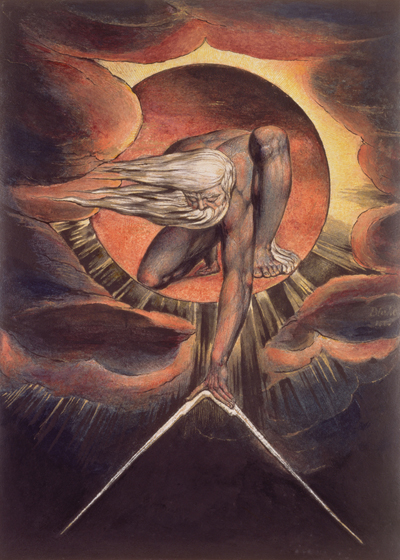
If you believe that the God you pray to created this universe of a trillion or more galaxies, and not just this little rock we call the Earth, and that He was smart enough to make use of all that real estate by populating it with other intelligent beings, and not just in the frail human form but perfectly adapted to conditions on their own planet, then you have to stop thinking that “in His image” literally means physical form and function.2 You then must grant that perhaps qualities of the awakened mind—like consciousness, perception, understanding, imagination, and empathy—are what is meant by the image of God. You would begin to suspect that what your God values is not the number of limbs, fingers, or noses, but the same intellect that He represents in your Bible story and that we all look for when we say “intelligent life.”

In the same way, every other physical detail and most of the miracles in the Bible stories fall apart. Did God make all of universe in just six days, or is that a metaphorical interpretation? Did Joshua stop the sun in the sky, or was that an eclipse, or maybe just a seemingly timeless moment in a long afternoon’s battle? Did Jesus raise the dead, or did the observers perhaps not understand the nature of catalepsy or coma? Did Jesus really turn water into wine, or was the wine already in the jars, and perhaps everyone was just a bit too tipsy to notice? I could go on—but remember, these are the imaginings of a stone-cold unbeliever.

You will have to make your own interpretations and decisions.

1. To be fair, it’s only in the last hundred years that astronomers have discovered that some of those faint, fuzzy patches in the night sky are other galaxies, each as large or larger than the Milky Way, and at vast distances. Human knowledge and discovery are still in their infancy.

2. See The God Molecule from May 2017. If I were to believe in a god, it would have to be a subtle, intelligent, far-thinking being. The DNA-RNA-protein domain that governs all life on Earth and supports evolution of species to meet changing conditions fits that requirement much better than a static creation from handfuls of clay.

Sunday, March 17, 2024

Robots

Boston Dynamics robot

I am still interested in artificial intelligence, although there have been notable failures that were recently publicized. Some of the large language models (LLMs) tend to bloviate, hallucinate, and outright make up facts when they can’t confirm a reference. (Compliance with user’s request first, accuracy second.) And some of the art programs can’t get human hands right or, in a more embarrassing story, one program was secretly instructed to offer mixed-race presentations of historical figures like the American Founding Fathers or soldiers of the Third Reich. (Compliance with programming rules first, accuracy second.) But these are easily—or eventually—corrected mistakes. The game is in early innings these days.

I have more hope for business applications, like IBM’s Watson Analytics, which will sift through millions of bytes of data—with an attention span and detail focus of which no human being is capable—looking for trends and anomalies. And I recently heard that one law firm has indeed used its LLM to write drafts of legal briefs and contracts—normally the work of junior associates—with such success that the computer output only needed a quick review and editing by a senior associate. That law firm expects to need fewer associates in coming years—which is, overall, going to be bad for beginning lawyers. But I digress …

So far, all of these artificial intelligence faux pas have had minimal effect on human beings, and users are now forewarned to watch out for them. Everything, so far, is on screens and in output files, and you open and use them at your own risk. But what happens when someone begins applying artificial intelligence to robots, machines that can move, act, and make their mistakes in the real world?

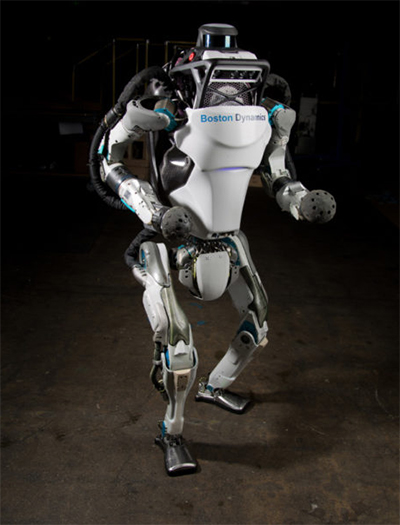
It turns out, as I read in a recent issue of Scientific American, that a firm is already doing this. A company called Levatas in Florida is applying artificial intelligence to existing robot companies’ products for inspection and security work. The modified machines can recognize and act on human speech—or at least certain words—and make decisions about suspicious activity that they should investigate. Right now, Levatas’s enhanced robots are only available for corporate use in controlled settings such as factories and warehouses. They are not out on the street or available for private purchase. So, their potential for interaction with human beings is limited.

Good!

Back in 1950, when this was all a science fiction dream, Isaac Asimov wrote I, Robot, a collection of short stories about machines with human-scale bodies coupled with human-scale reasoning. He formulated the Three Laws of Robotics, ingrained in every machine, that was supposed to keep them safe and dependable around people:

1. A robot may not injure a human being or, through inaction, allow a human being to come to harm.

2. A robot must obey the orders given it by human beings except where such orders would conflict with the First Law.

3. A robot must protect its own existence as long as such protection does not conflict with the First or Second Laws.

That seems like a pretty neat and complete set of rules—although I wonder about them in real life. Morality and evaluation of the consequences of action are more than a simple application of the Ten Commandments. For example, if your robot guard turns on and kills my flesh-and-blood dog, to whom I am emotionally attached, does that cause me psychological harm, in conflict with the First Law? A robot—even one with a fast-acting positronic brain—might labor for milliseconds and even freeze up in evaluating that one. Or on the hundred or thousand permutations on the consequences of any common action.

But still, the Three Laws are a place to start. Something like them—and applied with greater force than the rule set that gave Google customers a George Washington in blackface—will be needed as soon as large language models and their kin are driving machines that can apply force and pressure in the real world.

But then, what happens when the robot night watchman (“night watchmachine”?) lays hands on an obvious intruder or thief, and the miscreant shouts, “Let go of me! Leave me alone!” Would that conflict with the Second Law?

I think there’s a whole lot of work to be done here. Robot tort lawyers, anyone?